
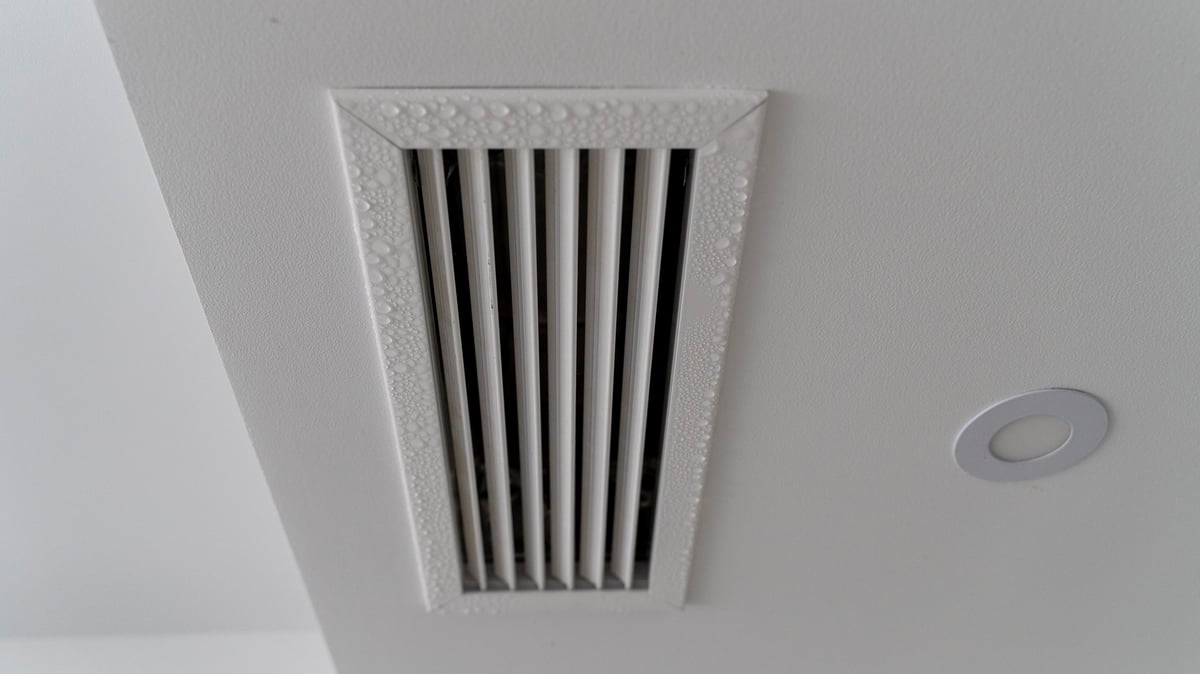
Air duct cleaning can be useful when there is a clear reason to remove contamination, but it is not routine maintenance for every home.
If you’re considering air duct cleaning in Houston, start with an inspection and evidence, not a coupon or a promise of better health. For regular filtration maintenance, see our HVAC filter replacement service and home services.
1. What Air Duct Cleaning Actually Does
A proper cleaning uses source removal: the technician places the duct system under negative pressure with specialized vacuum equipment, then uses agitation tools to loosen debris so it can be captured rather than released into your home. It should involve more than vacuuming a vent cover or wiping the visible grille.
The scope may include supply and return ducts, registers, grilles, and accessible HVAC components such as the air handler, blower, cooling coil, and drain pan. Ask which parts are included in the written estimate. A company may price some components separately.
Duct cleaning is not a fix for every HVAC problem. It does not repair poor airflow caused by a damaged duct, incorrect system sizing, a failing blower, or a clogged coil. It is not mold remediation, and it does not replace regular filter changes. Burton Residential Services provides HVAC filter replacement, a separate service that supports routine filtration.
2. When Cleaning May Be Worth Considering
The EPA’s duct-cleaning guidance does not recommend routine cleaning. It identifies substantial visible mold growth, vermin, or excessive debris that is released into the home as reasons to consider it. In practice, an inspection may also be sensible:
After a remodel or construction project if dust or debris entered the duct system.
After water intrusion, a pest problem, or a recent move-in when the system’s history is unknown.
If you see substantial debris inside ducts or particles blowing from supply registers.
If dust remains a concern after checking filter fit, replacement schedule, and other likely sources.
In Gulf Coast homes around The Woodlands, Conroe, Montgomery, Magnolia, and Willis, humidity makes moisture management especially important. Condensation, leaks, or a poorly draining coil pan can create conditions for biological growth. Cleaning alone will not solve the moisture source. Fix leaks and drainage issues first; wet or moldy porous duct insulation may need replacement rather than cleaning.
The EPA also notes that duct cleaning has not been shown to consistently improve health. Persistent symptoms deserve discussion with a medical professional and a broader look at indoor air quality, not an assumption that ducts are the cause.
3. When Cleaning Probably Is Not the Answer
A light coating of dust on a return grille is common and does not, by itself, prove that ducts need cleaning. If there is no evidence of contamination, routine cleaning may offer little value. A higher-priority step may be checking the filter, sealing air leaks, or arranging HVAC service.
Be cautious if a company promises health benefits, claims EPA certification, or pressures you into chemical fogging as a standard add-on. The EPA does not certify duct-cleaning companies, and it advises homeowners to understand the risks and intended use of chemical treatments before agreeing to them.
4. What a Thorough Job Should Include
Ask for a written scope before work begins. A professional should inspect first, explain what they found, protect your home, and show you what was cleaned. Before-and-after photos help document the condition of areas you cannot easily see.
Duct sealing is different from coating the inside of ducts with a sealant. Sealing accessible leaks can reduce unwanted air movement; it is a separate scope item and should be clearly described.
5. Air Duct Cleaning Cost in Houston: 2026 Estimates
Pricing depends on system count, home size, number of vents, access, contamination, and the exact components included. These are ballpark Houston-area estimates, not a quote. Get a written, all-inclusive scope and compare at least three providers.
| Scope | Typical Range |
|---|---|
| Per heating and cooling system | $450–$1,000 |
| What changes the price | System size, access, contamination, and services offered |
Some providers quote by vent instead of by system. Confirm whether returns, trunk lines, and HVAC components are included; a low advertised price may cover only a limited scope. The EPA describes typical costs of $450–$1,000 per heating and cooling system, depending on system size, access, contamination, and services offered.
6. How to Choose a Provider, and How Often to Clean
Avoid unsolicited calls, no-inspection offers, missing photos, pressure to decide today, and unusually low prices that depend on on-site add-ons. Ask for references, written pricing, and an explanation of the cleaning method. Be wary of automatic chemical fogging bundles.
There is no single cleaning schedule for every home. The EPA recommends cleaning as needed, not as a routine annual task. Consider an inspection when a specific event or visible condition gives you a reason. Between inspections, use the filter recommended for your system, replace it on schedule, and address water leaks and condensation promptly. Those steps, and properly sealing duct leaks, often matter more than periodic cleaning alone.