
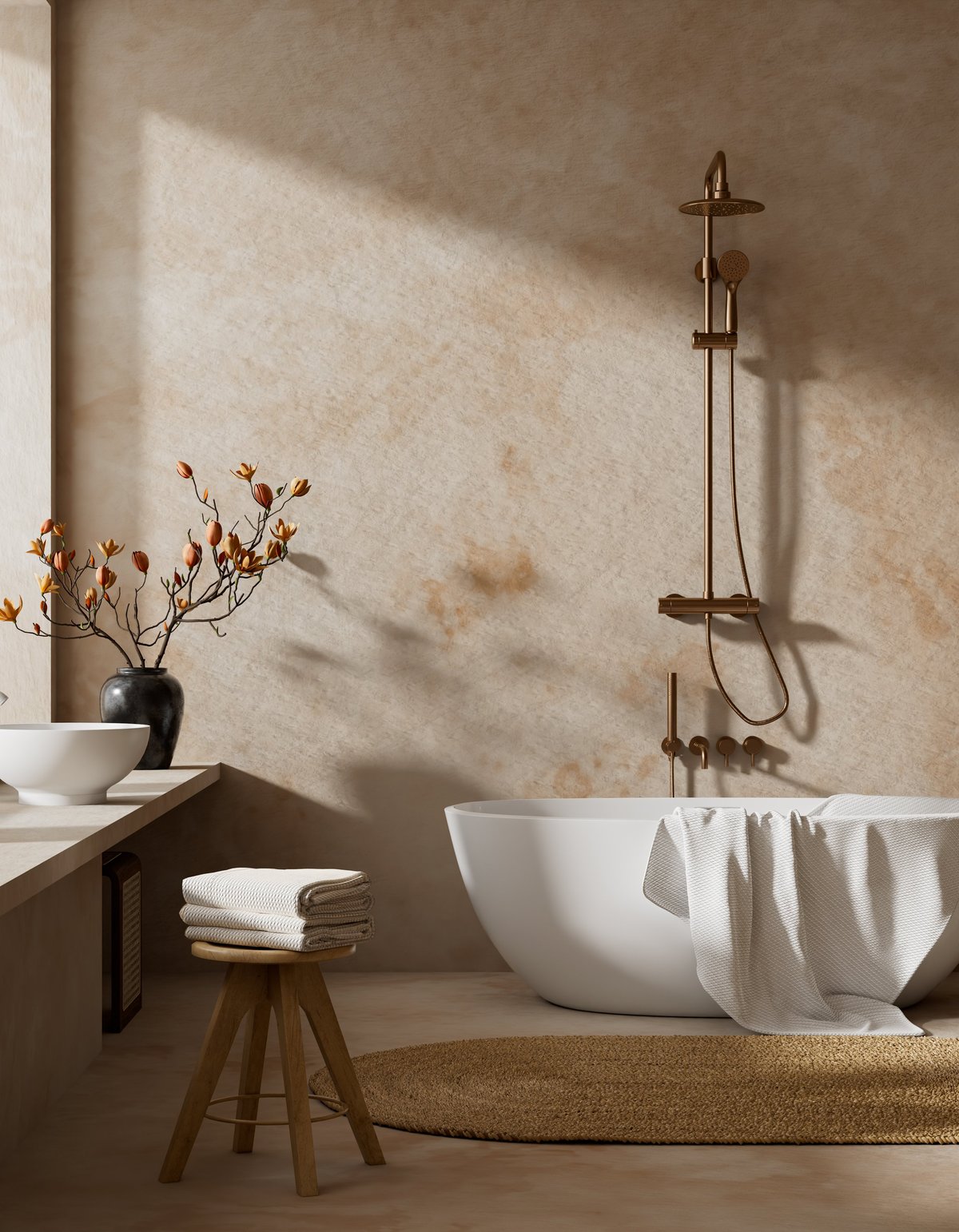
Your bathroom floor faces standing water, humidity, and wet feet every day. In Houston-area homes, the right floor also needs to handle everyday wear and a subfloor that may shift or move over time.
Explore our bathroom remodeling services and flooring installation services as you plan your project.
For homeowners in The Woodlands, Conroe, Montgomery, Magnolia, Willis, and greater Houston, the best choice balances moisture protection, traction, comfort, and budget. Here’s how the main materials compare, and what to check before installation.
1. What Makes Bathroom Flooring Different?
A bathroom floor is not just a smaller version of a living-room floor. Water can seep through poorly sealed joints, while steam and high humidity put extra stress on materials and finishes. A slippery surface is a safety risk, especially near a tub or shower.
Subfloor conditions matter, too. Some Southeast Texas homes sit on expansive clay soils, which can contribute to foundation movement as moisture levels change. That does not mean every home has a problem, but tile needs a sound, properly prepared surface. Non-negotiable: address signs of active foundation or subfloor movement before installing a new floor. New tile cannot correct an unstable base.
2. Bathroom Flooring Options Compared
Tile: Durable, but Installation Matters
Porcelain is dense and highly water resistant, making it a popular bathroom choice. Ceramic offers plenty of colors and patterns and can cost less. Both rely on correct installation: the floor beneath must be stable and flat, and grout joints must be maintained.
Choose matte, honed, or textured tile over polished tile for better traction. Small-format tiles have more grout lines, which may add grip. For a shower floor, tile size and layout also need to work with the slope toward the drain.
Marble, travertine, and other natural stones bring distinctive color and veining. But these materials are porous and typically require sealing. Marble can also etch or discolor from certain cleaners and products. Confirm the manufacturer’s care instructions, and avoid assuming that a stone’s appearance tells you how slippery it will be.
Vinyl: Practical and More Comfortable
Luxury vinyl plank and tile can deliver a warmer, softer feel than tile. Look for products specifically rated for bathroom use and confirm the manufacturer’s requirements for installation over or around wet areas. “Waterproof” flooring does not make an entire bathroom waterproof: water can still get through seams, edges, and poorly detailed transitions. Sheet vinyl can be a cost-conscious choice, with fewer seams than plank flooring. As with LVP, follow product instructions closely and make sure edges and transitions are properly finished.
Materials to Avoid in a Full Bath
Standard laminate and hardwood are generally poor choices for a full bathroom. Their cores or wood fibers can swell, warp, or deteriorate when exposed to repeated moisture. Even when a surface coating is water resistant, standing water or a leak can damage the material underneath.
3. Slip Resistance: Check the Finish, Not Just the Label
For level interior floors expected to get wet, a wet Dynamic Coefficient of Friction (DCOF) of 0.42 or greater is a common minimum reference point under ANSI A326.3. DCOF measures friction under specific test conditions; it is not a guarantee that a floor will never be slippery or suitable for every bathroom.
Ask for the product’s wet DCOF information and consider the room’s use, drainage, cleaning, and expected exposure to soap or other contaminants. For showers, the right choice also depends on tile size, grout joints, surface texture, and slope, not one number alone. Keep the floor clean and use bath mats where appropriate.
4. Grout, Waterproofing, and Subfloor Preparation
Cement-based grout is common and should be sealed when the product calls for it. Epoxy grout resists stains and moisture better than traditional cement grout, but it does not replace a waterproofing system. Neither grout nor tile alone makes a floor waterproof.
Before work begins, the installer should check for:
- A solid, clean, and suitably flat subfloor or slab.
- Cracks, soft spots, moisture, or signs of movement that need attention.
- A compatible underlayment or membrane where the installation requires one.
- Waterproofing details around a tub, shower, and other wet areas.
- Flexible sealant, rather than grout, where the floor meets a wall or tub if the installation system calls for it.
Houston’s humidity makes ventilation important, too. A properly used exhaust fan helps limit moisture buildup that can affect finishes and encourage mold.
5. 2026 Bathroom Flooring Costs in Houston
The ranges below are planning estimates for flooring material and installation. Actual bids vary with product selection, room shape, layout, removal of existing flooring, substrate condition, and project minimums.
| Material | Installed Cost / sq ft | 40 sq ft Bath | 100 sq ft Bath |
|---|---|---|---|
| Ceramic Tile | $5–$14 | ~$200–$560 | ~$500–$1,400 |
| Porcelain Tile | $6–$18 | ~$240–$720 | ~$600–$1,800 |
| Luxury Vinyl Plank / Tile | $5–$12 | ~$200–$480 | ~$500–$1,200 |
| Heated Floor Add-On | $8–$19 | ~$800–$1,400 typical total | Scales with heated area |
The project totals are simple estimates that multiply the estimated installed price by floor area; they do not include demolition, repairs, toilet reset, or other remodeling work. Real small-bathroom quotes can be higher because of minimum labor charges and extra preparation. Request an itemized estimate so you can see what is included.
6. Is a Heated Bathroom Floor Worth It?
Electric radiant floor mats can make tile and stone more comfortable during cooler mornings. In Houston, the upgrade is often easiest to add while the existing floor is already being removed. A rough 2026 planning range is $8–$19 per heated square foot installed. A typical bathroom may total around $800–$1,400, depending on heated area, controls, electrical work, and the installation system.
Running cost depends on the system’s wattage, your electricity rate, and how many hours you use it. As a rough example, a 40-square-foot heated area used about four hours a day may cost roughly $8–$12 per month. A programmable thermostat can help limit operating time.
Have a qualified professional confirm that the heating system is compatible with the floor assembly and that electrical safety requirements, including appropriate GFCI protection, are met. Tile and stone are common pairings; check product instructions before installing a heating system beneath vinyl.
7. Coordinate the Floor With a Tub or Shower Remodel
If you are replacing a tub, changing a shower, or moving plumbing, plan the floor and wet-area waterproofing together. A new shower may require work below and behind the tile that is separate from the main bathroom floor. Coordinating the work helps avoid mismatched heights, awkward transitions, and the expense of pulling up a newly installed floor later.