
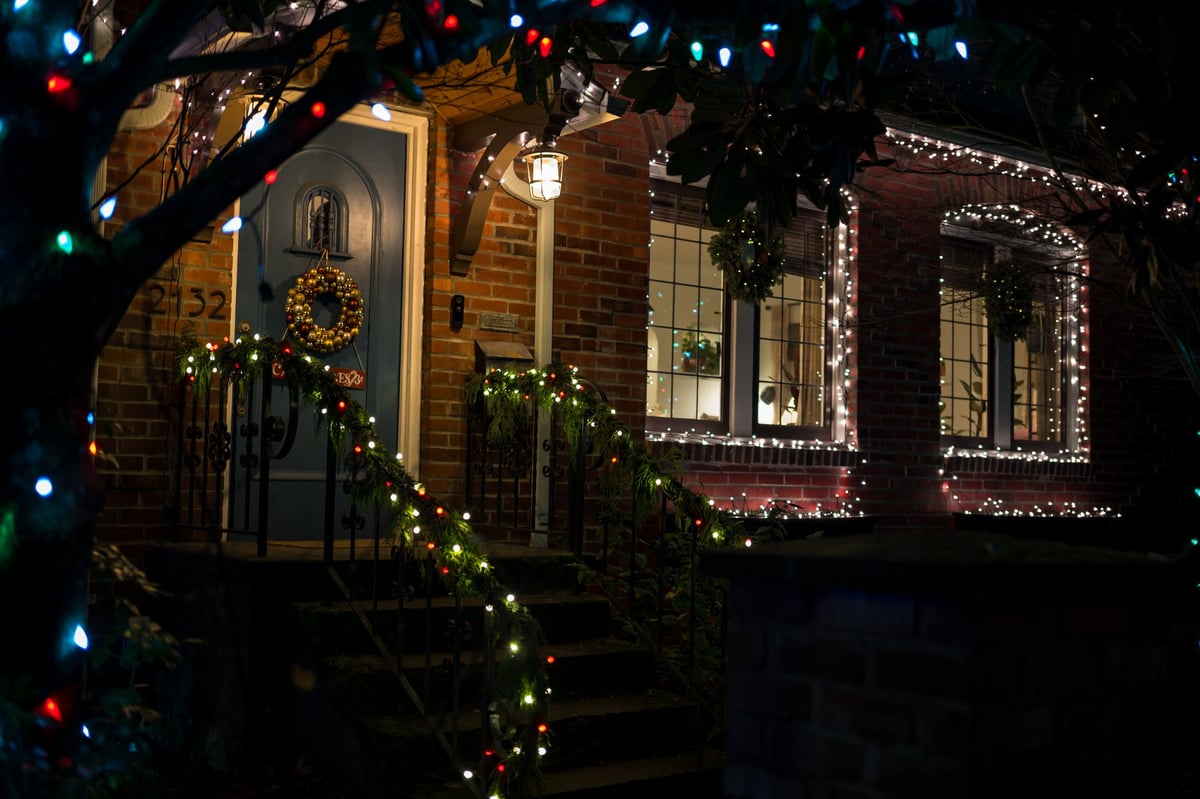
If you’re planning Christmas light installation in Houston, start with the look you want, the parts of your home you want to light, and who will handle installation and takedown.
A professionally planned display can save you from climbing ladders, working around unpredictable Texas weather, and wrestling with tangled lights in storage. It can also help create a balanced look rather than a collection of disconnected decorations. Below, you’ll find typical local price ranges, service options, and safety points to consider before booking. For ideas on permanent exterior lighting, see our guide to outdoor lighting in Houston, and review our home services for related electrical and exterior projects.
1. What Affects Holiday Lighting Costs in Houston?
The size and shape of your roofline are major cost factors. Two-story homes, steep roofs, hard-to-reach peaks, and large trees usually take more time and equipment to decorate. The light type, amount of coverage, installation height, takedown, repairs, and storage also affect the estimate.
Use the figures below as general 2026 planning ranges, not a quote. Local providers set their own minimums and packages.
| Option | 2026 Planning Range |
|---|---|
| Full-service roofline (per linear foot) | ~$4–$12 |
| Broader display (roof, trees, entry) | ~$800–$3,500+ |
| Takedown, repairs, and storage | Included by some providers — confirm in the estimate |
Your home’s access, roof shape, and requested design can move the price beyond these ranges. Ask whether the estimate includes commercial-grade lights, in-season repairs, removal, and storage. A low installation price may not include those services.
2. Compare Service Models
Read the scope carefully. “Full service” can mean different things from one company to another. Confirm who owns the lights, whether failed bulbs or storm damage are covered, when takedown happens, and where the lights will be stored.
Full-Service Rental
The provider supplies commercial-grade lights, installs them, repairs them mid-season, takes them down, and stores them for next year. Highest upfront cost, lowest effort for you.
Install + Takedown Only
You own the lights and keep them; the contractor handles the ladder and roof work on both ends. A good middle ground if you already own quality outdoor lights.
Design-Only Plan
A designer maps the layout, colors, and coverage from photos of your home — useful before you hire an installer or tackle the display yourself.
Do It Yourself
Lowest direct cost, but budget your time for setup, troubleshooting, takedown, and storage — plus the ladder and roof risk on taller homes.
3. Choose Lights and a Layout That Suit Your Home
LED vs. Incandescent
LED lights use less electricity and typically run cooler than traditional incandescent bulbs. For a roofline, many installers use C9 LEDs because the larger bulbs create a clear outline from the street. Mini lights are smaller and commonly used for trees, garlands, and shrubs. Incandescent lights can offer a familiar glow, but they usually draw more power.
Warm White, Multicolor, or App-Controlled
Warm white creates a classic, understated display. Multicolor adds a more playful look. RGB app-controlled systems let you change colors and effects, but ask about controls, weather suitability, and support before choosing them.
Pick the Areas That Matter Most
A simple roofline can make a strong first impression. Tree wrapping adds depth; pathway lights make an entry easier to see; wreaths and garland bring attention to doors and columns. You don’t have to light every feature. A focused layout often looks more polished and is easier to maintain.
A designer may use exterior photos to sketch the proposed layout, estimate roofline footage, and identify suitable outlets and access points. Ask to review the plan before installation, including the colors, coverage, and any trees or pathways included.
4. Safety Is Non-Negotiable
Ladder and roof work can lead to serious falls. Professional installation may be worth considering if your roof is steep, your eaves are high, or you’re uncomfortable working above ground. Rain, wet leaves, gusty wind, and sudden weather changes can make exterior work more dangerous in Southeast Texas. Never climb or work on a roof in unsafe conditions.
Electrical setup matters, too:
- Use only lights, extension cords, and connectors rated for outdoor use.
- Use GFCI-protected outlets outdoors. GFCI protection helps reduce shock risk when moisture is present.
- Never overload outlets, extension cords, or circuits. If you’re unsure whether the load is appropriate, ask a qualified electrician.
- Keep connections protected from water and off the ground where possible.
- Keep lights and cords well clear of power lines. Never attach decorations to power lines or approach them.
- Follow the light manufacturer’s instructions, and unplug displays before adjusting or repairing them.
5. Check HOA Rules and Book Early
Some communities in The Woodlands, Conroe, Montgomery, Magnolia, and Willis have rules about installation dates, brightness, color, or decorations visible from shared areas. Requirements vary, so check your HOA documents or contact the association before work begins. If the home is in a managed community, ask whether contractors need prior approval.
For the 2026 season, October and early November are good times to request estimates. Installers’ calendars often fill as the holidays approach, and early planning gives you time to compare designs, confirm HOA requirements, and choose a service model. If you’re booking later, ask about availability and the likely installation window.
6. Plan Takedown and Storage Before You Book
Agree on a removal date and who will take down the display. Lights left up too long can be exposed to additional weather and may become harder to remove cleanly. If storage is included, find out whether the provider labels and organizes lights by roofline, tree, or area. That can make next season’s setup smoother.
If you store lights yourself, keep them dry, label each set, and avoid tightly bending wires around sharp edges. Check cords and bulbs before reuse. Replace damaged equipment rather than attempting an improvised repair.