Concrete Driveway Replacement Houston: Repair vs Replace Costs 2026
Driveway Repair vs Replace 2026

Concrete Driveway Replacement in Houston: Repair vs Replace and 2026 Costs

Compare concrete driveway repair, resurfacing, and replacement costs in Houston for 2026. Learn how cracks, settling, tree roots, clay soil, drainage, and finishes affect your project.

By Gary Burton
October 16, 2026
9 min read
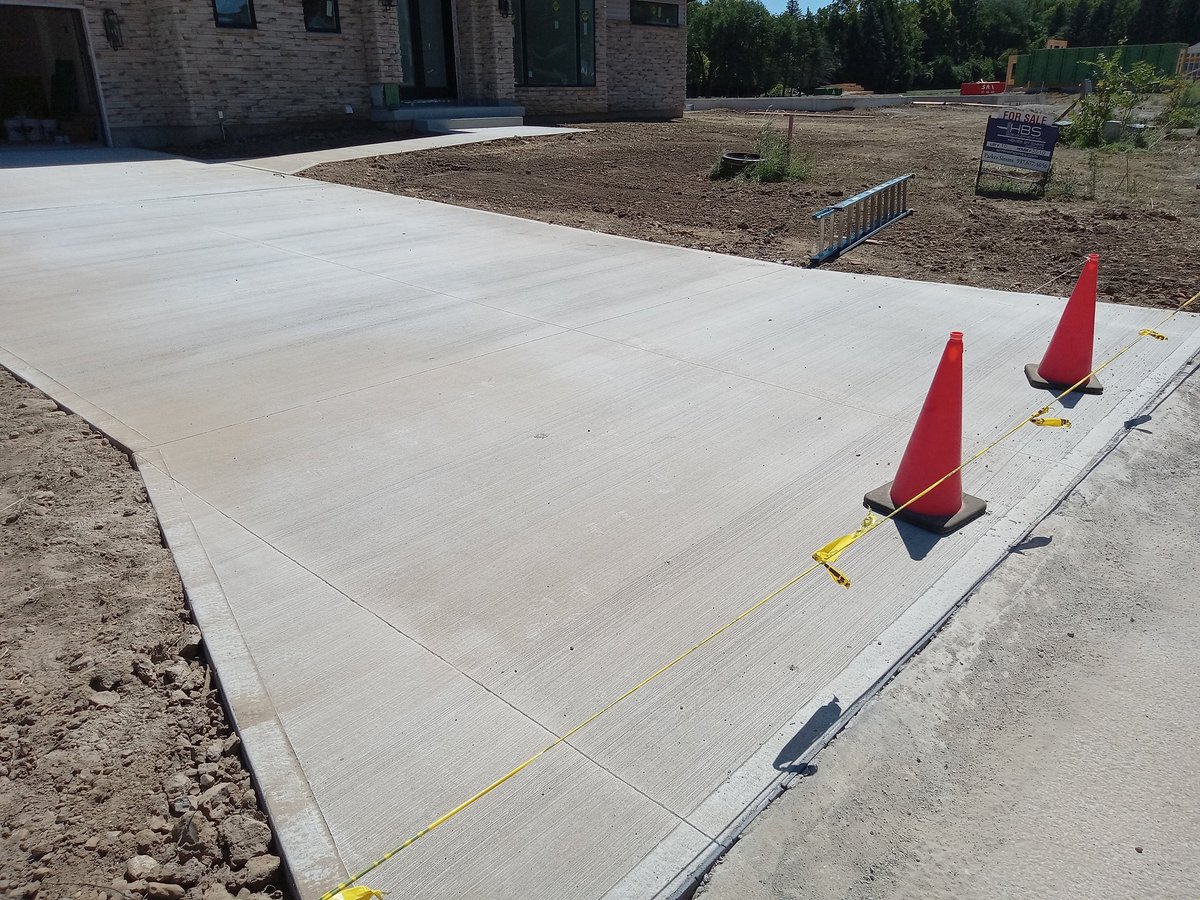
Construction work new driveway

Replacing a damaged driveway is a significant home improvement investment. The right solution depends on more than the size of the cracks. Soil movement, drainage, tree roots, slab thickness, and the condition of the concrete base all affect whether repair or complete replacement makes sense.

Burton Residential Services helps homeowners throughout Montgomery County with dependable home repair services, including exterior concrete-related improvements and property maintenance. If you live in The Woodlands, Conroe, Montgomery, Magnolia, or Willis, a local evaluation can help you avoid paying for a temporary fix when the slab has a deeper structural problem.

1. Concrete Driveway Replacement Houston: 2026 Cost Ranges

For a typical Houston-area driveway replacement, budget approximately:

Finish / Scope Cost/sq ft (installed) Typical 640 sq ft Driveway
Broom Finish (standard) $8–$12 $5,100–$7,700
Exposed Aggregate $10–$16 $6,400–$10,200
Stamped / Decorative $12–$24+ $7,700–$15,400+
Difficult Site Conditions $18–$24+ $11,500–$15,400+

These are planning ranges, not a guaranteed quote. Demolition, haul-away, poor soil, access limitations, reinforcement, drainage improvements, and decorative details can change the final price. A 640-square-foot two-car driveway may cost roughly $5,100–$7,700 for a straightforward broom-finish replacement before unusual site conditions or upgrades.

For additional local context, Houston concrete pricing guides from Concrete Network and area contractors show that preparation and finish selection are major cost factors.

2. When Driveway Repair Makes Sense

Repair is usually the better choice when the slab is mostly stable and the damage is limited.

You may be a good candidate for repair when:

  • Cracks are narrow, isolated, and not causing a height difference.
  • The surface has minor pitting or shallow spalling.
  • Water drains correctly and does not collect against the garage or foundation.
  • Only one or two panels are damaged.
  • The driveway has no widespread rocking, heaving, or settlement.

Small cracks can sometimes be cleaned and sealed. Localized spalling may be patched or covered with a bonded resurfacing product. A damaged panel can also be removed and repoured without replacing the entire driveway.

However, never treat repeated cracking as a purely cosmetic issue. If a repair opens again quickly, water or soil movement may be affecting the slab below.

3. When Full Replacement Is the Better Investment

Replacement is generally more practical when the driveway has widespread structural damage. This is especially important in areas where expansive clay soil moves as moisture levels change.

Consider full replacement when you see:

Wide cracks with vertical displacement.
Multiple intersecting cracks or "alligator" cracking.
Panels that rock when driven over.
Settlement or heaving of approximately one-half inch or more.
Large areas of deep spalling or exposed reinforcement.
Tree roots lifting several sections.
Drainage flowing toward the home.
Repairs that have failed repeatedly.

A driveway with more than roughly 25% to 30% structural damage often becomes expensive to maintain through piecemeal repairs. In that situation, a new base, properly reinforced slab, and corrected slope may provide better long-term value than repeated patching.

Homeowners in The Woodlands, Conroe, and nearby communities should pay close attention to settlement and drainage. Local conditions can vary from one property to the next, so a visual inspection is essential before choosing a repair method.

4. Resurfacing and Overlay Options

A concrete overlay places a new cement-based surface over existing concrete. It can improve appearance and cover minor surface wear without the cost of full demolition.

An overlay is appropriate only when:

  • The existing slab is structurally sound.
  • There is no significant settlement or heaving.
  • Cracks are limited and stable.
  • The base is not saturated or undermined.
  • Drainage problems have already been corrected.

An overlay will not permanently solve moving soil, active tree-root pressure, or a sinking slab. It follows the movement of the concrete below and may crack again.

5. Choosing a Driveway Finish

Your finish affects both appearance and cost.

Broom Finish

The standard value-oriented option. It provides a lightly textured surface with dependable traction, even when wet. A practical choice for most homes in Montgomery County.

Exposed Aggregate

Reveals decorative stones within the concrete surface. Creates more visual interest and complements brick, stone, or landscaping. Costs more than broom-finished concrete.

Stamped Concrete

Can mimic brick, slate, cobblestone, or other patterns. Offers a custom appearance but requires more labor, color, and maintenance planning. Harder to match on future repairs.

6. Drainage, Clay Soil, and Expansion Joints

A quality replacement is about more than pouring new concrete. The base must be prepared correctly for local soil and weather conditions.

The driveway should slope away from the garage and foundation. A common planning range is approximately 1/8 to 1/4 inch of fall per foot, depending on the site. The exact grade should account for sidewalks, curbs, property lines, and existing drainage paths.

On expansive clay soil, proper preparation may include:

  • Removing soft or organic soil.
  • Installing and compacting a suitable aggregate base.
  • Correcting low spots before the pour.
  • Using reinforcement appropriate for the driveway and expected loads.
  • Directing runoff away from the house.
  • Addressing tree roots before replacing affected panels.

Control joints should be placed to help manage where shrinkage cracks occur. Isolation or expansion joints are essential where the driveway meets the garage slab, sidewalk, curb, or another rigid structure. Never omit these joints simply to reduce the initial price.

7. How to Compare Houston-Area Estimates

When reviewing a driveway proposal, ask whether the price includes:

Demolition and concrete haul-away.
Subgrade correction and compacted base.
Slab thickness and concrete strength.
Rebar or wire reinforcement.
Control and expansion joints.
Drainage and slope adjustments.
The selected surface finish.
Cleanup and final walkthrough.

The lowest bid is not always the lowest long-term cost. A detailed proposal should explain the work clearly and identify what is included before construction begins.

Frequently Asked Questions

Ready to Replace or Repair Your Driveway?

Ready to improve your driveway? Get a free, no-obligation estimate. We'll help you choose the right repair, resurfacing, or replacement solution for your property. Serving Montgomery County for 40+ years.

Serving The Woodlands, Conroe, Montgomery, Magnolia, Willis, and surrounding communities.