
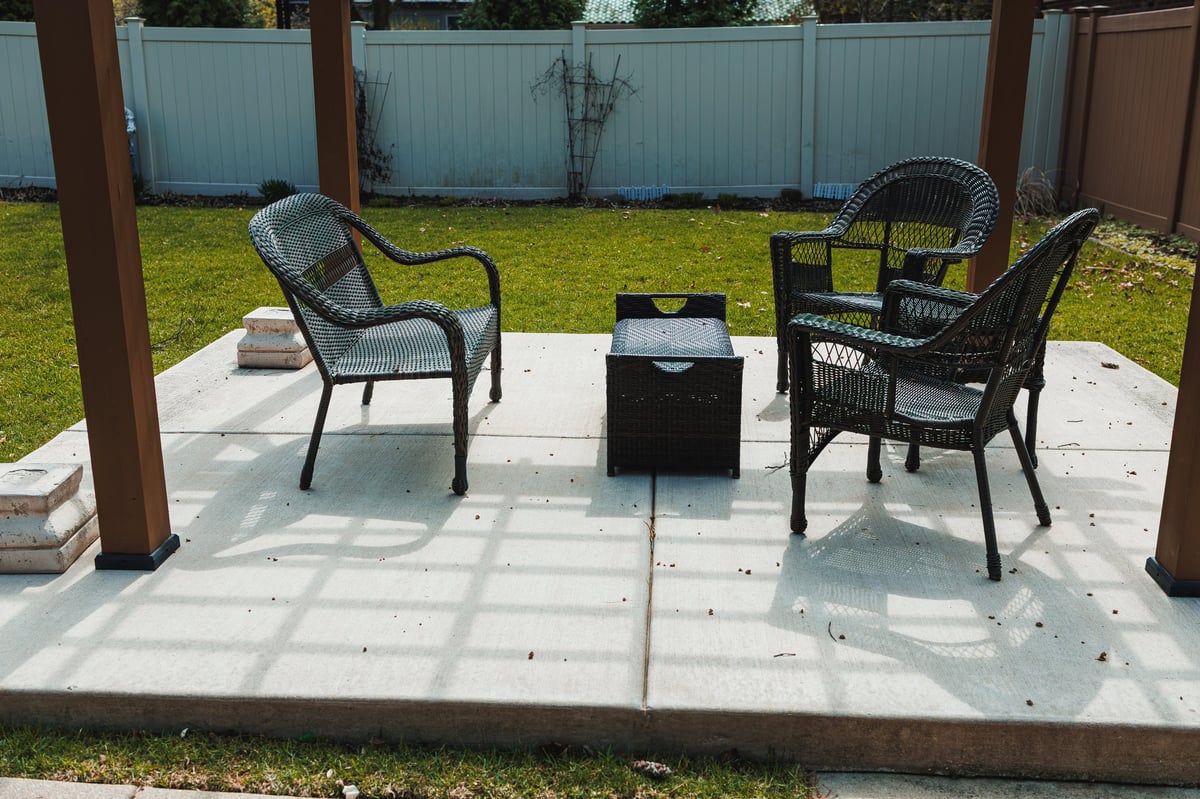
A concrete patio can give you a durable, low-maintenance base for outdoor dining, lounging, or entertaining. In Houston and Montgomery County, though, a patio needs more than an attractive finish: proper grading, drainage, and preparation matter on clay soils that expand and contract with changing moisture.
If you're planning a larger outdoor space, see our guide to covered patios and pergolas for Texas homes.
Whether you're considering a simple slab or a decorative stamped surface, plan the patio alongside the rest of your home project. Our home services and general contractor guidance for Montgomery County can help you understand the planning and coordination involved.
Why concrete can work well for Houston patios
Concrete offers a solid, easy-to-clean surface and can be customized with color, texture, or patterns. It won't rot like wood, and it doesn't have the individual units and joints of a paver patio. But concrete is rigid: soil movement, poor drainage, or a weak base can contribute to cracking or unevenness. No concrete patio is guaranteed to stay crack-free.
Houston's humidity, intense sun, and heavy rain also affect how your patio performs over time. A well-planned installation accounts for water runoff, curing, and a suitable finish — not just the concrete pour.
Concrete patio costs in Houston for 2026
Your final price depends on patio size, site access, demolition, base preparation, drainage, finish, and design details. The following are planning ranges, not a project quote. The Houston patio cost guide from Angi also notes that site and project details affect the final price.
| Finish | Cost per sq ft | 400 sq ft patio |
|---|---|---|
| Broom finish (basic) | $8–$14 | $3,200–$5,600 |
| Stamped concrete | $10–$20 | $4,000–$8,000 |
| Stained concrete | $8–$25 | Varies widely |
For a 400-square-foot patio, a basic broom finish might budget at roughly $3,200–$5,600. Stamped concrete could range from around $4,000–$8,000 depending on the pattern and color treatment. These estimates may not include demolition, major drainage work, permits, or other site-specific costs. Ask for an itemized estimate that spells out what is included.
What drives the cost?
Ground preparation
Removing an old patio, excavating, and preparing a stable base add labor and hauling costs.
Drainage and grading
Correcting a slope or addressing standing water may require additional work.
Finish and detailing
Stamping, multiple colors, borders, and sealer add steps beyond a plain finish.
Access
Tight side yards or difficult equipment access can change labor and delivery needs.
A low per-square-foot quote isn't necessarily an equivalent deal. Compare the written scope, including base preparation, slab specifications, reinforcement, joint layout, drainage, and finish.
Broom-finish, stamped, or stained?
Broom finish
A lightly textured surface created by drawing a broom across fresh concrete. It's a practical, straightforward choice for everyday use.
Stamped concrete
Textured while the surface is workable to create patterns that resemble flagstone, brick, or slate. Color and borders can make the design more distinctive, but the finished look depends on skilled installation and ongoing sealer maintenance.
Stained concrete
Adds color to a concrete surface. The result varies with the surface, stain system, and preparation. Ask how the color will look on your specific patio and whether the estimate includes surface preparation and protection.
For any finish, discuss slip resistance when wet — especially near steps, a pool, or an outdoor kitchen.
Concrete vs. pavers vs. a deck
The right choice depends on your yard, drainage, home access, budget, and how you'll use the space. A contractor can assess the site before you settle on a material. If you want a side-by-side price comparison, read our deck vs. patio cost guide for Texas homes.