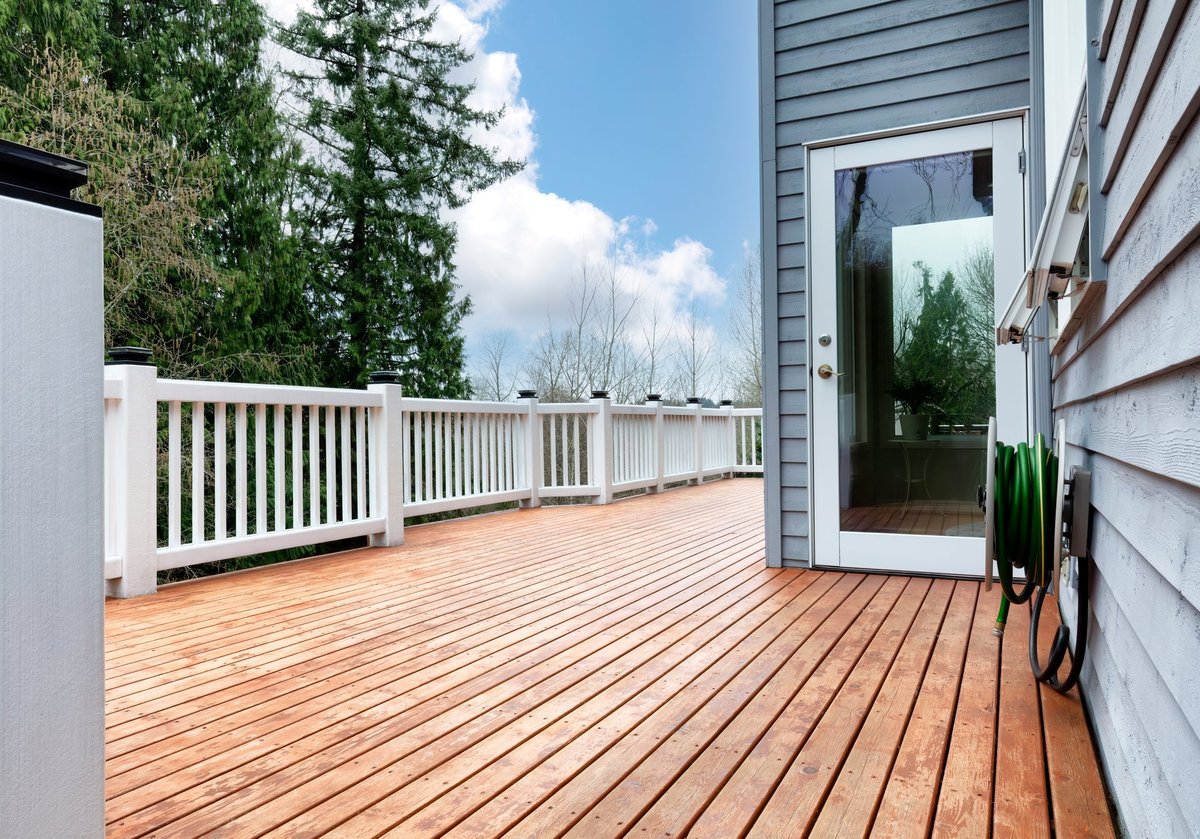
Texas decks work hard. Strong sunlight fades wood, summer humidity encourages mildew, and frequent rain pushes moisture into cracks, joints, and end grain. Over time, a deck can turn gray, rough, slippery, or visibly uneven. Professional Outdoor Living deck refinishing can restore its appearance while helping protect the structure beneath the finish.
For homeowners in The Woodlands, Conroe, Montgomery, Magnolia, and Willis, deck staining is not only a cosmetic upgrade. It is routine maintenance for an outdoor living area exposed to Southeast Texas weather. Our Outdoor Living services include deck repairs and refinishing, with preparation based on the wood species, existing finish, and current condition.
Why Houston Weather Damages Deck Finishes
Texas sun breaks down the pigments and protective binders in stain. This causes fading, dry boards, and surface checking — small cracks that allow water to enter. Houston-area humidity creates a second problem. Moisture remains trapped longer after rain, especially in shaded areas and between closely spaced boards.
Warning signs include:
Never stain over active mildew, peeling finish, or damp wood. The new coating will not bond properly, and the problem will return quickly.
Cleaning and Brightening Before Staining
Proper preparation is the most important part of deck staining. A professional process typically includes:
Removing furniture, leaves, dirt, and debris.
Applying a wood-safe deck cleaner.
Scrubbing or washing away mildew, pollen, and old surface grime.
Using a wood brightener to neutralize cleaner residue and restore a more even appearance.
Allowing the deck to dry completely, usually 24–48 hours or longer during humid conditions.
Sanding rough areas and removing remaining finish as needed.
Pressure washing must be controlled. Excessive pressure can damage soft cedar, raise the grain, and leave visible cleaning marks. Before staining, the boards should be clean, dry, sound, and free of loose fibers.
Semi-Transparent vs. Solid Stain
Semi-transparent stain
Adds color while allowing the natural grain to remain visible. Usually the best choice for newer cedar or pressure-treated lumber in reasonably good condition.
Benefits include:
- Natural wood appearance
- Easier maintenance coats
- Good moisture resistance
- Less noticeable wear in high-traffic areas
Solid stain
Creates a more uniform, paint-like appearance. Can disguise mismatched boards, repairs, and heavy weathering on an older deck.
However, solid stain requires exceptional preparation. If applied over failing finish or damp wood, it can peel in sheets. Solid stain is a practical solution for worn decks, but it is not a shortcut around sanding and stripping.
Oil-Based vs. Water-Based Products
Oil-based stains generally penetrate deeper and can provide rich color on dry, weathered wood. They may be a good fit for heavily exposed decks, but they often dry more slowly and require careful cleanup.
Water-based stains dry faster and are easier to clean up. Many newer products offer strong mildew resistance and work well when the surface is properly prepared. Product compatibility matters more than choosing a finish based only on the label.
The right product depends on:
Cedar and Pressure-Treated Wood Considerations
Cedar naturally resists insects and decay, but it still needs protection from ultraviolet light and moisture. A penetrating semi-transparent stain usually preserves cedar's character while slowing graying.
Pressure-treated wood is common in Texas decks because it resists rot. New pressure-treated boards can retain treatment moisture, so they must be sufficiently dry before staining. A moisture test is essential. Staining too early can trap moisture and cause uneven absorption or premature failure.
Surface Preparation: Sanding, Stripping, and Repairs
The condition of the deck determines the scope and price. Lightly weathered wood may need cleaning, brightening, and spot sanding. Peeling solid stain may require chemical stripping, extensive sanding, and multiple cleaning steps.
Board replacement is non-negotiable when wood is soft, split through, structurally damaged, or rotting around fasteners. Stain cannot repair unsafe framing or deteriorated boards. Loose nails, protruding screws, damaged railings, and unstable stairs should also be corrected before refinishing.
How Often Should a Houston Deck Be Re-Stained?
Most Houston-area decks need a maintenance coat approximately every two to three years. High-sun locations, uncovered decks, sprinkler exposure, and heavy foot traffic may require more frequent attention. Covered decks or shaded areas may last longer, although humidity and mildew still need to be monitored.
A simple annual inspection helps. Sprinkle water on the boards. If it quickly soaks in instead of beading, the protective finish may be wearing away.