
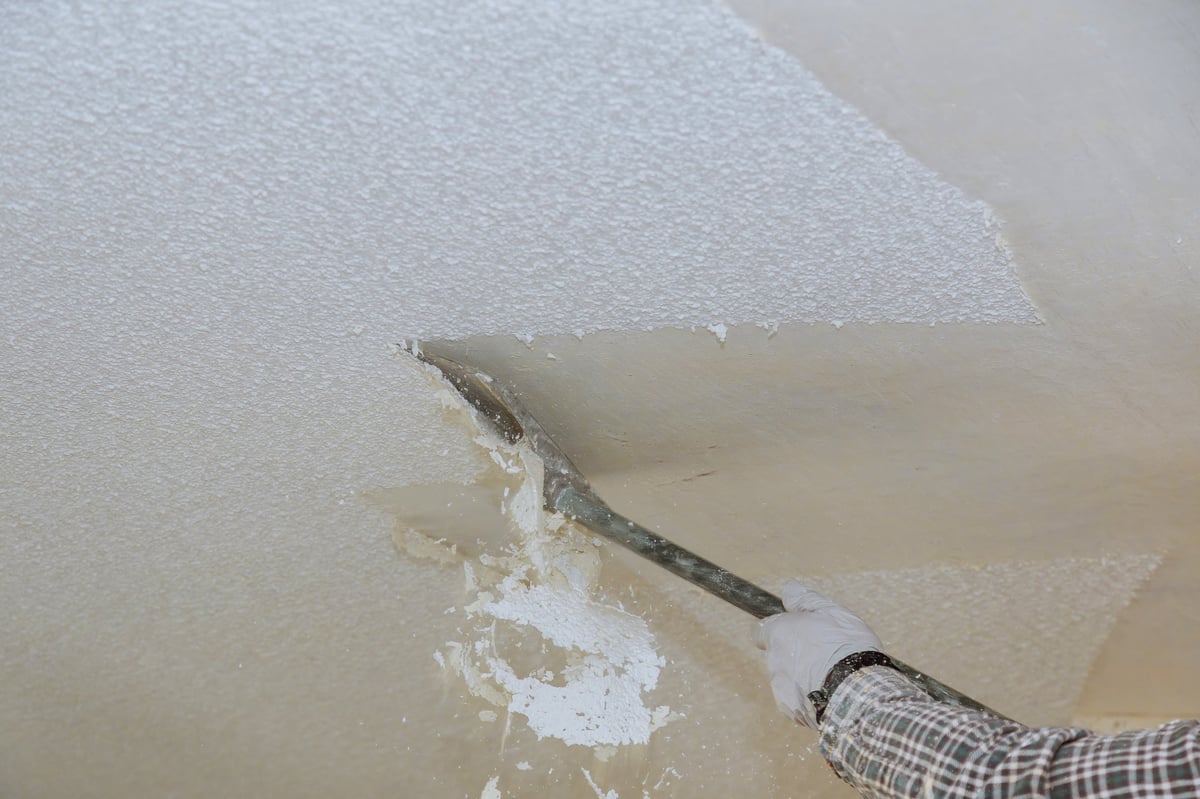
A small drywall patch can be solid and well-finished yet still stand out if its texture doesn’t match. For help with patching, texturing, and finishing, see our drywall repair services. We help homeowners in The Woodlands, Conroe, Montgomery, Magnolia, Willis, and surrounding communities plan repairs and ceiling updates.
If you’re comparing drywall texture repair Houston options or looking into popcorn ceiling removal cost Houston, first consider the ceiling’s age, condition, and finish you want. Popcorn ceilings are common in many 1980s and 1990s homes, while smooth ceilings have become a popular choice for a cleaner, more contemporary look.
Houston drywall textures: what are you matching?
Texture changes how light falls across a wall or ceiling. A patch with the wrong pattern, depth, or consistency can catch your eye even after it’s painted. A professional typically tests the finish on a sample surface before applying it to the repair.
Orange Peel
A light, stippled pattern sprayed with a hopper gun. The most common finish in newer Houston-area homes and forgiving on walls that aren’t perfectly flat.
Knockdown
A heavier sprayed texture flattened with a trowel or knife, leaving soft irregular patches. Very common on 1990s–2000s walls and ceilings.
Popcorn / Acoustic
The bumpy, spray-applied finish on many 1980s–1990s ceilings. It hides imperfections well, but it dates a room and can be harder to clean.
Smooth / Level 5
A skim-coated, sanded finish with no texture at all. Modern and clean, but it reveals every imperfection — prep and lighting matter more than ever.
2026 popcorn ceiling and texture repair costs
Use these Houston-area ranges as an initial budgeting guide, not a quote. The job’s size, ceiling height, access, existing damage, and level of finish all affect the price. Small repairs may be priced as a minimum project rather than strictly by square foot.
| Scope | Cost/sq ft | What it usually covers |
|---|---|---|
| Popcorn scrape only | $0.70–$2.00 | Removal of texture; repair and finish are separate |
| Removal + retexture | $1.00–$3.00 | Scrape plus a new orange peel or knockdown finish |
| Removal + smooth finish | $2.00–$5.00 | Extra skim coating and sanding for a flat surface |
| Minimum patch project | Often $250–$650 | Small repairs priced as a minimum visit, not by area |
| Asbestos testing & abatement | Separate | Not included in any removal range above |
These ranges are for planning. For comparison, one 2026 Houston estimate puts scrape-and-retexture projects around $0.96–$2.88 per square foot, while other local cost guides give broader ranges depending on the scope. See a Houston popcorn ceiling cost estimate. Ask for a written estimate that says whether protection, drywall repair, texture, primer, and paint are included.
Asbestos testing and abatement are not included in these removal ranges. If testing identifies asbestos, stop and get a separate written plan and estimate from a qualified asbestos professional. The required work can vary significantly with the material, containment, and disposal requirements.
Popcorn ceiling removal: test before work starts
The non-negotiable first step is to assess potential asbestos before disturbing an older ceiling. The risk deserves particular attention in pre-1980s homes, but a home’s age alone cannot confirm whether its ceiling contains asbestos. You can’t reliably identify asbestos just by looking.
If the ceiling may contain asbestos, do not scrape, sand, drill, or otherwise disturb it. The EPA advises leaving undamaged material alone and having suspect material assessed by a trained professional when remodeling may disturb it. Read the EPA’s guidance on protecting your family from asbestos exposure.
Once the material has been assessed and the appropriate plan established, a typical non-asbestos removal and refinishing project involves:
Protecting the room
Cover floors, furniture, walls, and doorways with plastic sheeting. Control dust and keep people and pets away from the work area.
Preparing the ceiling
Check for loose material, damage, stains, and prior repairs. Loose or unstable material must be addressed before a new finish is applied.
Removing or covering the texture
Depending on the ceiling’s condition and project plan, the existing finish may be scraped, encapsulated, or covered with new drywall. These options aren’t interchangeable; a contractor should explain the pros and limitations for your ceiling.
Repairing and finishing
Patch or skim-coat as needed, then apply the selected texture or smooth finish. Let joint compound dry fully before sanding, priming, or painting.
Priming and painting
Prime the prepared surface, then apply ceiling paint for an even, consistent appearance.