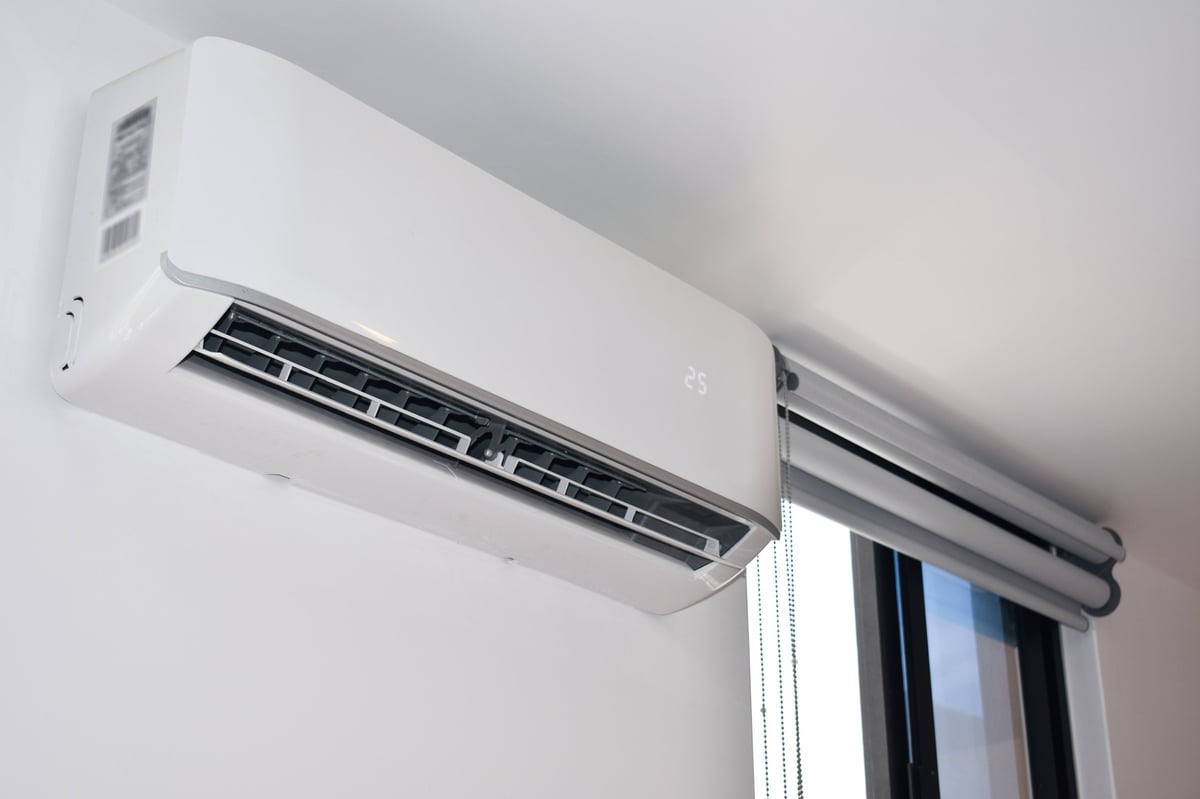
A ductless mini-split can make a hot upstairs bedroom, sunroom or garage conversion comfortable without extending your home's existing ductwork.
If you're planning a room addition or other updates, Burton Residential Services in The Woodlands can help you plan the renovation work around your home's needs. Mini-splits need thoughtful planning, especially in Southeast Texas, where long cooling seasons and high humidity put extra demands on comfort systems. Our HVAC filter replacement service supports indoor-air-quality maintenance, while this guide explains what to consider when you're evaluating a ductless system with an HVAC professional.
1. How a ductless mini-split works
A mini-split has an outdoor unit connected by refrigerant lines, wiring and a condensate drain to one or more indoor units, often called "heads." Each head heats or cools the area around it directly, without sending air through the home's central duct system. Many systems are heat pumps, so they can provide heating as well as cooling.
Because there are no long duct runs, a mini-split can be useful where adding ductwork would be disruptive or impractical. But it does not automatically replace every function of central HVAC: the indoor heads serve specific zones, and their filters and airflow are different from a central system's. The U.S. Department of Energy's ductless mini-split overview describes these systems and their potential applications.
2. When does a mini-split beat central AC?
A ductless system may be worth comparing with central AC when you need to condition a distinct area, such as:
A garage conversion, workshop or home gym
A new addition or enclosed patio
A sunroom with significant sun exposure
A home office used during the day
An upstairs room that stays uncomfortable despite adjustments to the central system
For a single problem area, a separate mini-split may avoid the cost and disruption of extending ducts or replacing a central system that otherwise works well. For a whole-home project, compare ductless, ducted and mixed-system options. The right choice depends on your home's layout, existing equipment, insulation, duct condition and comfort goals, not just the equipment price.
Mini-split vs. central AC: A PNNL mini-split guide notes that both ducted and ductless systems should be evaluated based on the home and its needs; neither option is automatically best for every house.