
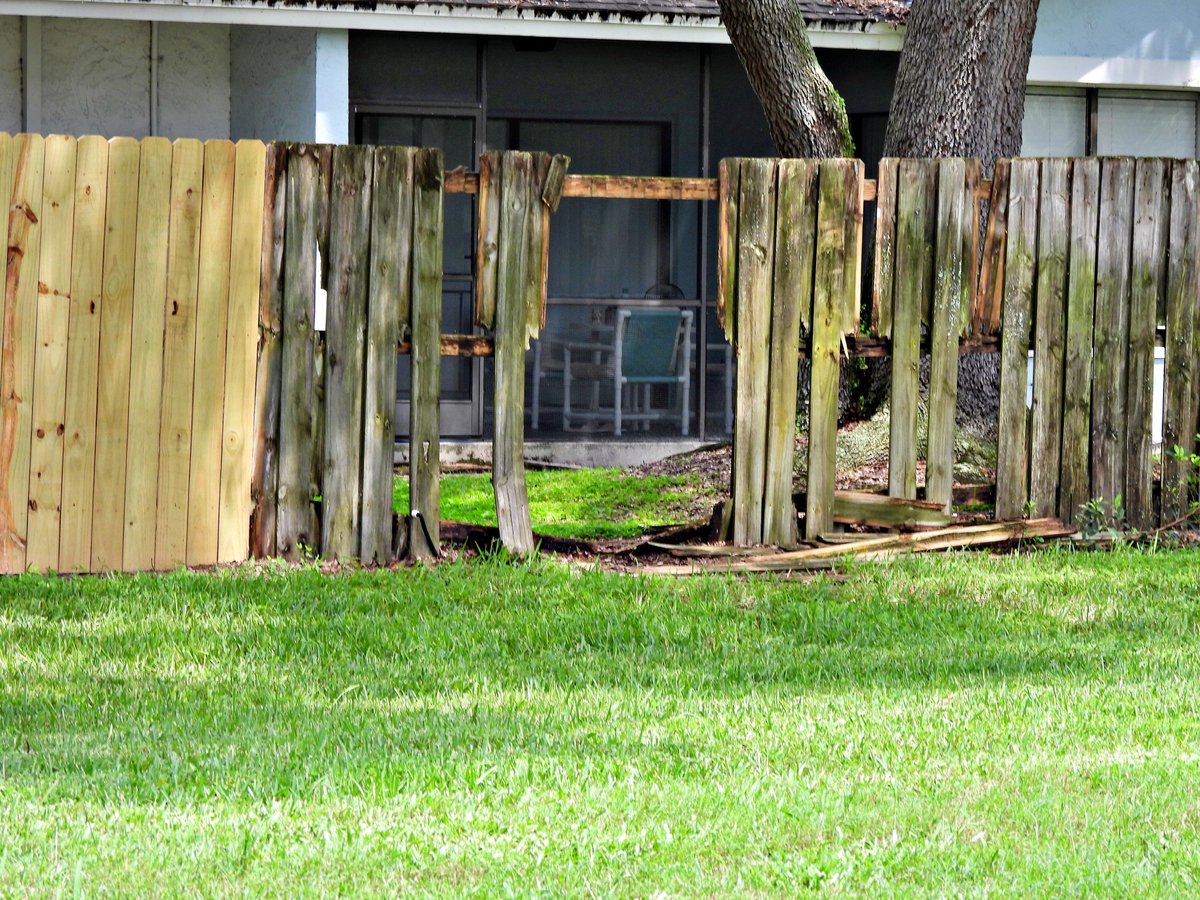
A fence can look fine from the street while posts are soft at ground level or a gate is pulling out of alignment. Houston-area humidity, heavy rain, clay soil, and Gulf Coast wind all put stress on fence components.
If you need help deciding what can be repaired, explore our fencing services and home repair services.
For homeowners in The Woodlands, Conroe, Montgomery, Magnolia, Willis, and greater Houston, the right solution depends on what failed, not just what looks damaged. A few loose pickets are a different project from a line of rotted posts. Here’s how to evaluate the fence, estimate costs, and choose a repair that lasts.
1. Common Fence Failures Around Houston
Posts often fail first. Soil in the region expands and contracts as moisture levels change. Combined with persistent dampness, this movement can loosen footings and expose wood posts to prolonged moisture. Rot is especially common where a post meets the soil or where mulch and debris stay piled against the fence.
Leaning sections
Posts have shifted, footings have loosened, or soil has moved.
Storm-damaged panels
Wind can break rails, loosen fasteners, or push sections out of alignment.
Loose or popped pickets
Fasteners can work loose as wood dries, swells, and weathers.
Sagging gates
Worn hinges, loose screws, or a weak gate frame can make a gate drag or stop latching.
Rusted fasteners
Corrosion weakens connections and can leave rails or pickets unstable.
A warning: replacing the visible boards without fixing a failed post, rail, hinge, or drainage problem usually means the same area will need work again.
2. Fence Repair vs. Replacement: How to Decide
The table below is a starting point, not a substitute for an on-site inspection. The condition of the posts, rails, and remaining fence matters as much as the number of damaged boards.
| What You’re Seeing | Usually Points To |
|---|---|
| A few pickets or one panel | Repair — the structure underneath is likely sound |
| One or two leaning posts | Post and footing repair on the affected line |
| A dragging or misaligned gate | Hinge or frame repair — unless the gate post itself has moved |
| Roughly a quarter or more of the fence | Compare repair and replacement on a like-for-like basis |
The 25% guideline is a practical comparison point, not a strict rule. If the fence is otherwise in good condition, repair may still make sense. If posts across the property are deteriorating, a patchwork of new panels may not be the best investment.
For replacement planning, see our fence installation guide for The Woodlands once you’re ready to compare styles, materials, and project considerations.
3. What Does Fence Repair Cost in Houston in 2026?
Repair prices vary with fence material, access, disposal, the number of posts or panels, and whether matching materials are available. These are general planning ranges, not a quote. The extent of damage affects the final price.
For comparison, full replacement per linear foot:
| Fence Material | Installed Cost / Linear Ft |
|---|---|
| Wood | $18–$35 |
| Vinyl | $25–$45 |
| Chain Link | $10–$25 |
| Ornamental Iron | $30–$60 |
A repair estimate may rise if crews need to remove concrete footings, replace multiple rails, haul away old material, or work around landscaping. Ask for an itemized scope so you can compare the repair cost with replacement on a like-for-like basis. Our Houston fence installation cost guide lists these broad per-linear-foot replacement ranges.
4. Why Posts Fail, and What a Proper Post Repair Includes
A post can look only slightly tilted above ground while its buried section has rotted or its footing has shifted. The repair needs to address the cause, not just pull the fence upright.
A proper repair generally includes inspecting the post, rails, and adjoining sections; removing the failed post and footing where needed; and setting a new post in a footing appropriate for the fence and site conditions. The footing should drain properly, and its finished surface should direct water away from the post. Setting depth and footing size depend on the fence design and conditions at the property.
Sistering means attaching a new support alongside an existing post. It may help when the post itself is sound and the problem is limited to support above ground. It is not a dependable fix for a post rotted below grade or an unstable footing.
Never hide ground-level rot with a board or decorative cover instead of correcting it.
5. What Repairs Make Sense for Each Fence Type?
Wood
Individual pickets, rails, panels, and posts can often be replaced. Match the wood and dimensions where possible; new boards may look different until they weather.
Vinyl
A cracked rail or panel may be replaceable if compatible parts are available. Check the posts and connections before replacing only the visible piece.
Composite
Damaged boards or sections may be repairable, but color and profile matching can be challenging. Follow the manufacturer’s attachment requirements.
Chain Link
A damaged section of mesh, tension wire, post, or gate hardware may be replaced. A loose or leaning post still needs a stable footing.
Wrought Iron
A professional may be able to repair a loose connection or replace a damaged section. Rust should be addressed before it spreads into structural connections.
6. Storm Damage, Insurance, and Gate Repairs
After a Gulf Coast windstorm, take clear photos and video before moving damaged materials. Record the date, the affected fence sections, and any damage to gates or nearby structures. Save receipts for temporary work needed to prevent further damage, and contact your insurer to confirm what your policy covers.
Fence coverage, depreciation, and deductibles depend on your policy. The Texas Department of Insurance advises homeowners to review their coverage and deductible before filing; a fence-only repair may cost less than the deductible. Read its storm-damage and insurance claim guidance. Do not assume a claim will cover full replacement costs.
For a sagging gate, check whether the hinges are loose, worn, or pulling from the post. A repair may involve tightening or replacing hinges, correcting alignment, or reinforcing the gate frame. If the gate post has shifted or rotted, adjusting the hinges alone will not solve the underlying issue.
7. Avoid These Common Repair Mistakes
Nailing new pickets to rotten rails
The fasteners may hold briefly, but the weak rail remains.
Patching without addressing water
Clear soil and mulch away from wood, check sprinkler direction, and correct drainage issues around posts.
Using mismatched fasteners
Exterior-rated hardware helps resist corrosion in wet, humid conditions.
Skipping permits or approvals
Before a full replacement — especially if you’re changing fence height, location, or materials — check local requirements and HOA rules.
Staining over a failing surface
Clean and prepare sound wood first. Stain and seal can help extend a wood fence’s life, but they cannot restore rotted posts or rails.
Start with our guide to Texas fence permit requirements.