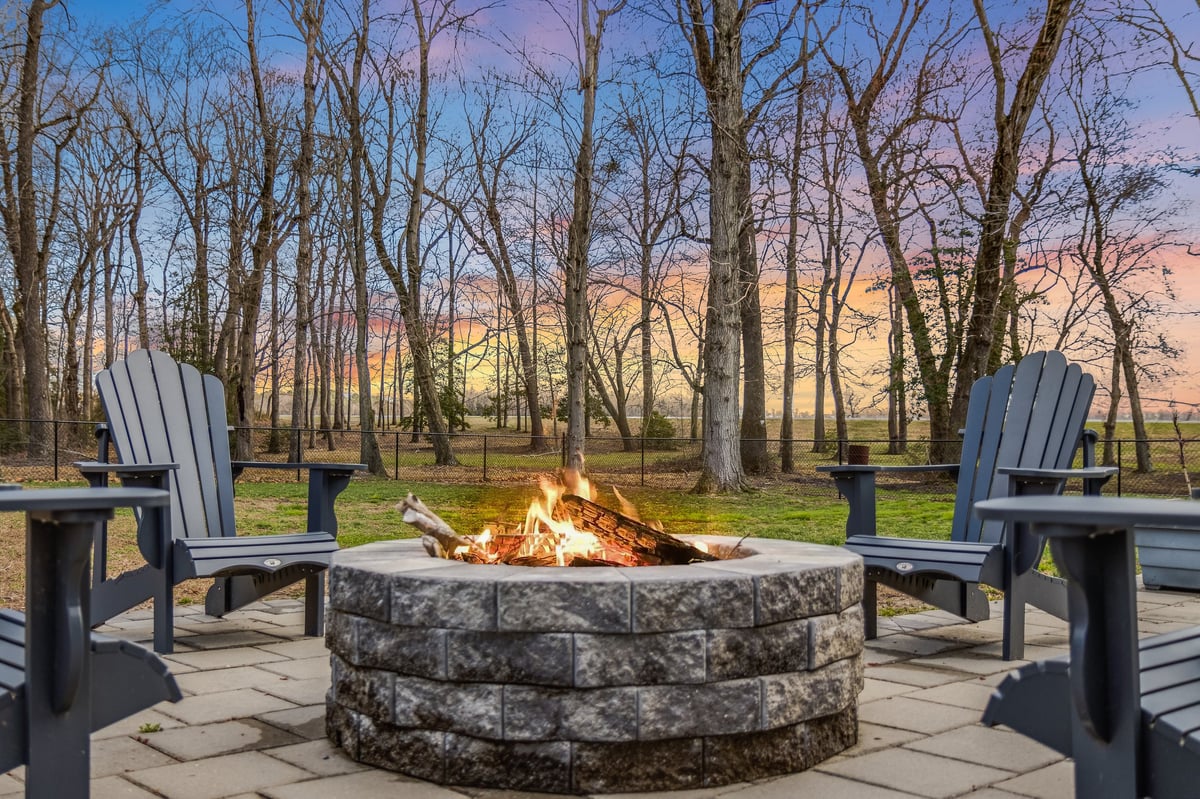
A well-designed fire pit can turn an unused backyard into a comfortable gathering space. If you are planning outdoor living improvements in The Woodlands, Conroe, Montgomery, Magnolia, or Willis, the right fire feature can add warmth, atmosphere, and value without overwhelming your patio.
At Burton Residential Services, we help homeowners coordinate outdoor improvements, masonry, patio work, and related home upgrades through one experienced contractor. Before you choose a kit or schedule a gas connection, you need to consider fuel type, local rules, drainage, seating layout, and the total installed cost.
2026 Fire Pit Installation Costs in Houston
Your final price depends on the size, fuel source, materials, site conditions, and whether the fire pit is portable or permanently constructed.
| Fire Pit Type | Typical 2026 Cost |
|---|---|
| Portable wood or propane pit | $200–$1,500 |
| Paver-kit fire pit (installed) | $1,000–$3,500 |
| Custom wood-burning masonry pit | $2,000–$8,000+ |
| Built-in natural gas fire pit | $3,500–$8,000+ |
| Masonry fireplace / high-end feature | $9,000–$18,000+ |
| New gas line | ~$14–$25 per linear foot |
| Grading or leveling | ~$500–$2,500 |
| Drainage improvements | ~$1,000–$4,000 |
These are budgeting ranges, not a substitute for a site-specific estimate. A long gas-line run, difficult access, drainage problems, premium stone, electrical ignition, or extensive patio work can increase the investment.
Wood-Burning vs. Gas vs. Propane
🔥 Wood-Burning Fire Pits
Wood provides the traditional campfire experience and may have the lowest initial equipment cost. You do not need a gas line, and a basic steel pit or masonry ring can be relatively affordable.
However, wood produces smoke, sparks, ash, and embers. That can create problems on smaller lots or in wooded neighborhoods. Wood-burning pits are also more likely to be restricted during burn bans or by HOA rules.
Wood is best suited to homeowners who have adequate open space, understand local restrictions, and are willing to manage firewood and cleanup.
💨 Natural Gas Fire Pits
Natural gas is convenient, clean-burning, and easy to control. A permanent gas pit can be turned on without storing firewood, making it a popular choice for homeowners who want frequent use.
The tradeoff is a higher installation cost. A new underground gas line normally requires proper sizing, a licensed professional, a pressure test, and inspection. Any electronic ignition, lighting, or nearby outlets may also require electrical work.
Gas is often the most practical choice for a polished outdoor living area, but a gas appliance does not automatically eliminate permitting or fire-code requirements.
🛢️ Propane Fire Pits
Propane offers more flexibility than natural gas because many units connect to a removable tank. Portable propane tables are useful when you want a lower-cost option or may rearrange your backyard later.
Built-in propane systems can cost more because of the burner, enclosure, tank storage, ventilation, and finish materials. Tanks must be placed and protected according to the manufacturer's instructions and applicable code.
Portable, Paver-Kit, or Permanent Masonry?
Portable Fire Pit
Usually the simplest option. It can be moved, replaced, or stored when not in use. Still, it must sit on a stable, non-combustible surface and remain clear of structures, fences, vegetation, and overhead branches.
Paver-Kit Fire Pit
Provides a more finished appearance without the cost of fully custom masonry. The base is critical. Installing pavers directly on unstable soil can lead to settling, cracking, and a leaning fire-pit ring.
Permanent Masonry Pit
Can be designed to match your home, patio, retaining walls, or outdoor kitchen. It offers the greatest control over shape, seating, finishes, and fuel type. It also brings the greatest responsibility for permits, setbacks, structural support, drainage, and gas or electrical coordination.
Layout, Seating Clearance, and Safety
Safety clearances are non-negotiable. Always follow the listed appliance instructions, local fire-code requirements, and the direction of the authority having jurisdiction. As an initial planning guideline:
- Keep a fire pit approximately 10–25 feet from combustible structures, depending on the appliance and local requirements.
- Do not place a fire pit beneath a low roof, patio cover, tree canopy, or combustible overhang unless the product and code specifically allow it.
- Keep flames away from siding, fences, decks, stored firewood, gas meters, electrical panels, and HVAC equipment.
- Use concrete, pavers, stone, or another non-combustible surface.
- Plan approximately 18–24 inches between the fire-pit edge and the front of seating for comfortable circulation.
- Leave enough room behind seating for people to walk safely without stepping near the flame.
- Keep a fire extinguisher, hose, or other appropriate fire-control equipment accessible.
- Never leave a fire unattended, and never burn household trash or construction debris.
For gas features, the burner, shutoff valve, ignition, ventilation, and gas-line route should be planned together. Cutting corners on gas work is never worth the risk.