
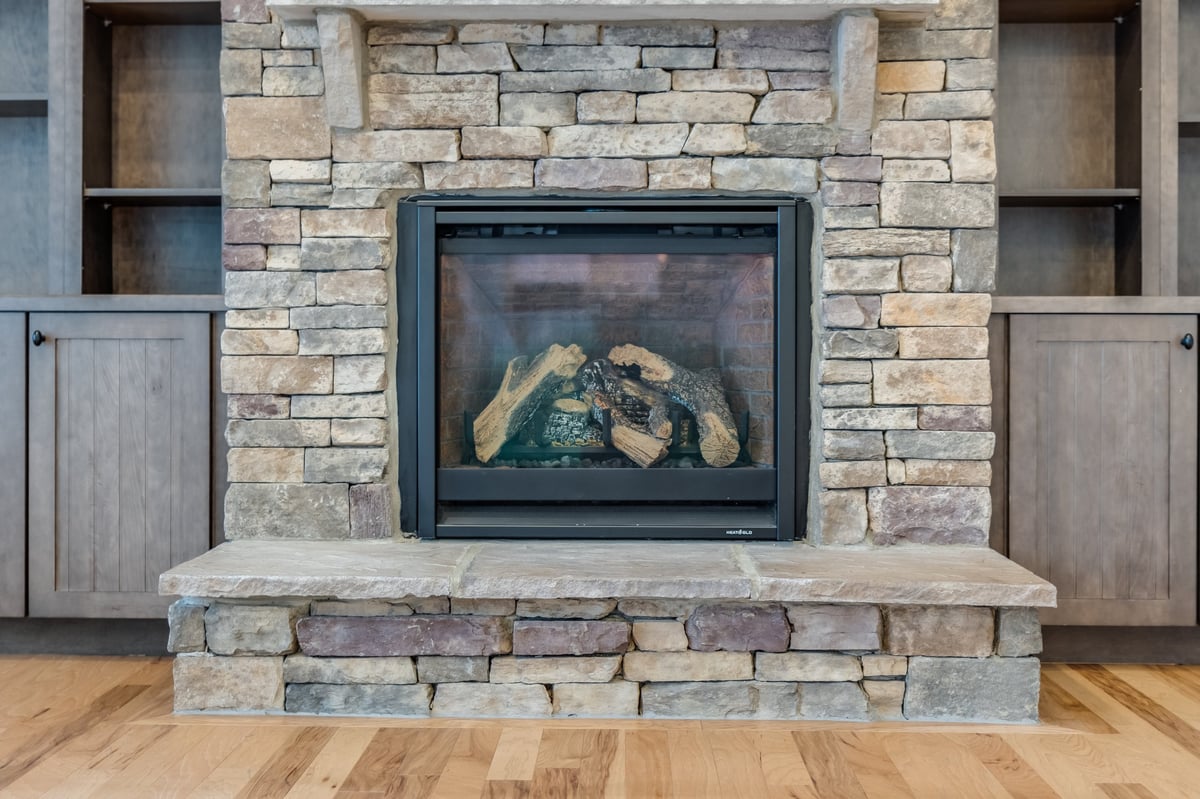
A fireplace can add a comfortable focal point to your home, but the right choice depends on your existing chimney, gas supply, room layout, and how much heat you need.
Burton Residential Services offers home renovation services for homeowners planning interior updates, and can help coordinate the surrounding carpentry and finish work. If you’re looking for help with related home repairs and installation, plan the fireplace as part of the wider project. In The Woodlands, Conroe, Montgomery, Magnolia, Willis, and greater Houston, the most important first step is to choose the appliance and venting plan before framing, selecting a mantel, or closing up walls.
1. Which Fireplace Type Fits a Houston Home?
Houston’s mild winters mean many homeowners want a fireplace primarily for ambiance and occasional supplemental heat, not as their only heating system. Your home’s existing setup often determines the most practical option.
Some homeowners replace wood-burning fireplaces with gas to reduce wood handling and simplify everyday use. A qualified installer should first assess the fireplace, chimney, and any liner; an existing chimney is not automatically ready for a gas appliance.
2. Gas Insert or New Fireplace Construction?
Gas Insert
A gas insert fits into an existing masonry or factory-built fireplace. It may be a cost-effective route when the existing opening and chimney are in good condition, but the project can require a correctly sized chimney liner, gas connection, and repairs to masonry or the chimney cap.
New Gas Fireplace
A new gas fireplace is built into a wall or feature area. A direct-vent model typically uses a dedicated vent through an exterior wall or roof. Because framing, venting, electrical, and gas supply can be coordinated before the wall is finished, new construction may be simpler than retrofitting an appliance into an unsuitable existing fireplace.
3. 2026 Fireplace Installation Costs
These are broad Houston-area budgeting ranges, not a quote. Appliance selection, vent route, gas-line distance, finish materials, electrical changes, permits, and the condition of an existing chimney can change the final price.
| Option | 2026 Planning Range |
|---|---|
| Vented gas insert installation | ~$3,000–$5,200 |
| Chimney liner, gas connection, chimney repairs | Adds to the base range |
| Surrounding finish work (hearth, surround, mantel) | Varies with materials |
For a gas fireplace insert cost in Houston, ask for an itemized estimate that identifies the appliance, liner or venting, gas connection, finish work, and permit costs. A long vent run, a gas-meter capacity issue, custom stonework, or hidden chimney damage can increase the total. Ask whether the estimate includes inspection and restoration of the surrounding wall, flooring, or hearth.
4. What Installation Involves
A professional should verify the appliance specifications and site conditions before work begins. Depending on your choice, installation may involve:
Measuring the existing fireplace opening and checking chimney or vent condition.
Planning a listed vent system through the chimney, wall, or roof.
Confirming the gas supply and line sizing for a gas appliance.
Framing the enclosure and installing approved materials around the unit.
Checking mantel, wall, flooring, hearth, and vent-termination clearances.
Completing required permit steps and inspections.
The unit’s installation manual, not a general online clearance chart, sets the required clearances. Never assume a mantel, television, trim, or combustible flooring can go a certain distance from the appliance without checking those instructions.
5. Safety Essentials: Gas Work Is Never DIY
Professional gas work is non-negotiable. Never install, extend, or alter a gas line yourself. Improper work can cause leaks, fire, or carbon monoxide exposure. Use a qualified professional for gas connections and have work inspected where required.
Install and maintain carbon monoxide alarms according to the alarm manufacturer’s instructions, including outside sleeping areas and on each level of your home. An appliance’s safety sensor is not a substitute for a CO alarm.
Ventless gas fireplaces release combustion products and water vapor into the room. The U.S. Department of Energy’s Building America Solution Center explains that unvented combustion appliances can affect indoor air and add moisture. This matters in humid Houston-area homes. Consider a direct-vent gas fireplace or electric unit if indoor air quality or moisture is a concern, and follow the appliance manual and local requirements.
If a CO alarm sounds, you smell gas, or anyone experiences dizziness, nausea, or headache while the fireplace is in use, leave the home and contact emergency services or the gas utility from outside.
6. Heating Output, Efficiency, and Comfort
Fireplace output is often listed in BTUs, a measure of heat. More BTUs are not automatically better. Room size, ceiling height, insulation, windows, air leakage, and how open the room is to adjacent spaces all affect comfort.
Ask the installer to explain both the appliance’s input and delivered heat output, its efficiency rating, and whether it needs electricity for a blower or ignition. A fireplace is usually best treated as supplemental or zone heat for the room where it is installed; it may not heat distant rooms evenly. In a Houston home, an oversized unit can make a room uncomfortable quickly.
7. Permits, HOA Rules, and Maintenance
Permit requirements depend on your property’s jurisdiction and the scope of work. Before purchasing an appliance, confirm who has authority over your address and whether gas, electrical, building, or fire approvals apply. The Montgomery County Fire Marshal provides information about the County Fire Code and permit process. The County residential permitting page also explains application requirements. City rules and HOA requirements may differ, so check both where applicable.
For gas fireplaces, schedule a professional inspection at least annually. Ask the technician to check the burner, pilot, connections, glass, and venting, and to look for damage or blockage. Clean glass only as directed by the manufacturer and never operate a unit with cracked glass, visible soot, or a suspected vent problem. Electric models generally need less service, but you should keep air intakes and outlets clear and follow the manual’s cleaning instructions.
8. Common Installation Mistakes to Avoid
Choosing the unit before confirming the vent route and opening dimensions.
Assuming an old chimney is safe or suitable without an inspection.
Focusing only on appliance price and overlooking gas, electrical, finish, and permit costs.
Installing a mantel or surround without checking the unit’s required clearances.
Treating a fireplace as whole-home heating without checking its output and room layout.
Skipping maintenance or ignoring unusual odors, soot, or changes in flame appearance.
A clear scope and an installation plan tied to your specific home help avoid costly changes after work begins.