Impact windows, fortified garage doors, roof straps, and more. These aren't just checklists — they're structural upgrades that can mean the difference between minor cleanup and a total rebuild when the next big storm hits the Gulf Coast.
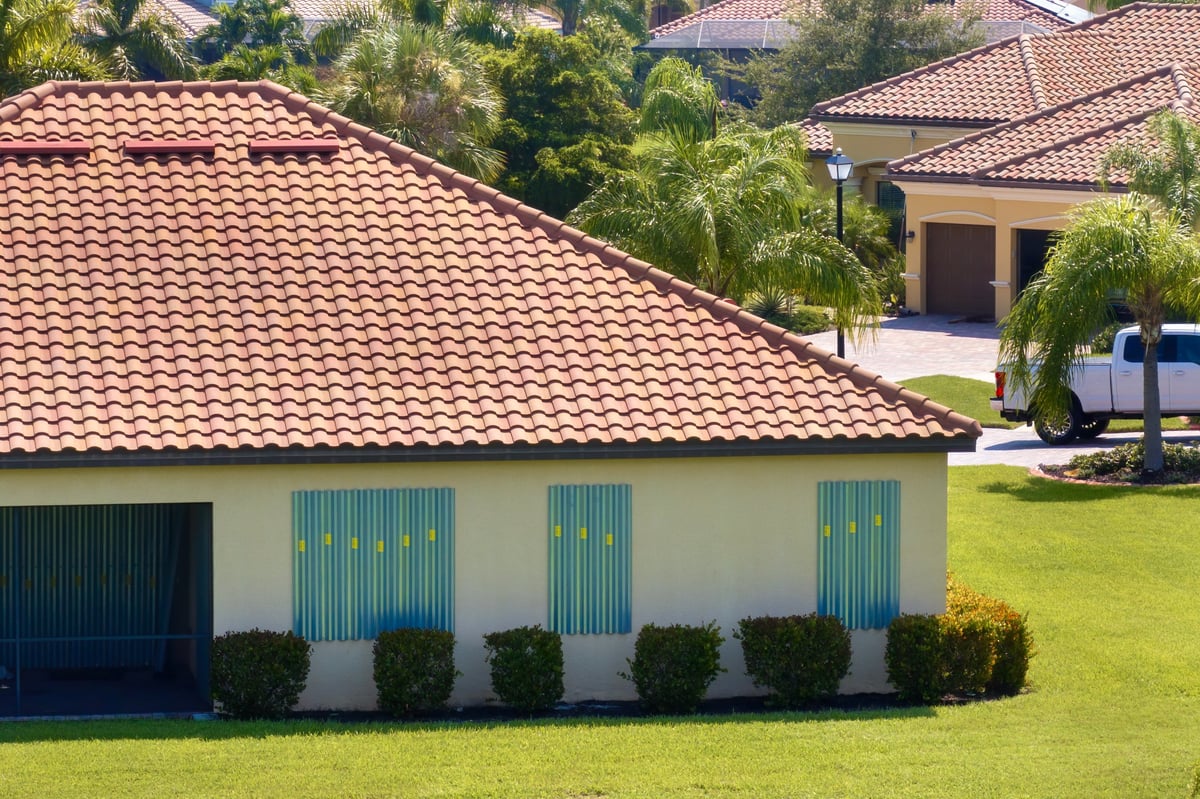
Let's be honest: most "hurricane prep" guides tell you to stock water bottles and charge your phone. That's day-before stuff. If you own a home in Houston, The Woodlands, or anywhere in Montgomery County, the real work happens months before a storm forms in the Gulf. Here are the 8 structural upgrades that actually make a difference when 130 mph winds hit your house.
Flying debris is the #1 cause of hurricane damage to homes. A 2×4 traveling at 100 mph doesn't just break a window — it pressurizes your house and can blow the roof off. Impact windows (tested to Miami-Dade standards) stop that projectile cold. Expect to pay $55–$85 per square foot installed in the Houston area. If that's out of budget, code-approved storm shutters or impact-rated panels run $7–$15 per square foot. Your insurance company may offer premium discounts for either upgrade — call and ask before you install.
The garage door is the single largest opening in most homes, and when it fails, the entire structure can pressurize and come apart. A wind-rated garage door with reinforced tracks and a stronger center post costs $1,500–$4,000 installed. For existing doors, a vertical bracing kit ($150–$400) adds significant reinforcement. If your door is more than 15 years old, this is the upgrade with the best cost-to-protection ratio on this list.
Most Houston-area homes built before 2003 don't have hurricane straps — galvanized steel connectors that tie the roof trusses to the wall framing. Without them, the entire roof assembly can lift off in high winds. Retrofitting straps requires accessing the attic-to-wall connection point, which typically means removing some soffit or interior drywall. Cost: $1,200–$3,500 depending on home size and accessibility. This is the least visible but most critical upgrade. If you're already replacing your roof, insist your contractor adds straps at every truss connection.
Your front door needs more than a deadbolt. A wind-rated fiberglass or steel door with a three-point locking system and reinforced frame anchors can withstand winds that would blow a standard residential door inward. Budget $800–$2,500 per door installed. At minimum, upgrade your existing door with a heavy-duty strike plate using 3-inch screws that bite into the framing (not just the jamb). That's a $10 fix that takes 10 minutes.
Lightning strikes and grid surges during hurricanes don't just fry your TV — they can damage HVAC compressors, well pumps, and water heaters. A Type 2 whole-home surge protector installed at the breaker panel costs $300–$600 installed by a licensed electrician. Pair it with point-of-use protectors on expensive electronics and you've got layered defense. If you're installing a standby generator (see our generator cost guide), a surge protector should be part of the same install.
If your home has a crawl space or enclosed foundation in a flood zone, flood vents allow water to flow through rather than build up hydrostatic pressure against foundation walls. This pressure is what causes foundations to crack or shift. Engineered flood vents cost $80–$150 each and you'll typically need 4–8. They're required by FEMA in certain flood zones and can lower your flood insurance premium. In Montgomery County, areas near Lake Conroe, the San Jacinto River, and Spring Creek are particularly vulnerable.
When wind peels off shingles, rain hits the roof deck underneath. If that decking isn't sealed, water pours into your attic — often before you even know you've lost shingles. The FORTIFIED Roof standard uses a secondary water barrier: a self-adhering membrane applied to the entire roof deck before shingles go on. For a typical Houston-area home (2,000–3,000 sq ft roof), this adds $1,000–$2,500 to a re-roofing project. It's significantly cheaper than ceiling and insulation replacement after a storm.
The cheapest upgrade on this list is also one of the most effective. Dead limbs, overhanging branches, and poorly anchored outdoor furniture become projectiles in hurricane-force winds. Have a certified arborist inspect trees within falling distance of your home. Expect $300–$1,200 for professional trimming depending on tree count and size. For outdoor items, install ground anchors for sheds, playsets, and large equipment. A $30 anchor kit can prevent thousands in damage.
If you can only do two things before this hurricane season: (1) brace your garage door and (2) install a secondary water barrier if you're re-roofing. These two upgrades address the most common failure points — the large opening that pressurizes your house and the water intrusion that destroys everything inside. Everything else is icing.
Burton Residential Services has been helping Montgomery County homeowners harden their homes for 40+ years. We're not storm chasers — we're your neighbors. If you want a professional assessment of your home's hurricane readiness, get a free estimate here or call us at (832) 483-2387.
Get a free, no-obligation home hardening assessment from Montgomery County's trusted contractor. We'll inspect your windows, doors, roof connections, and garage — and give you a prioritized plan with transparent pricing.