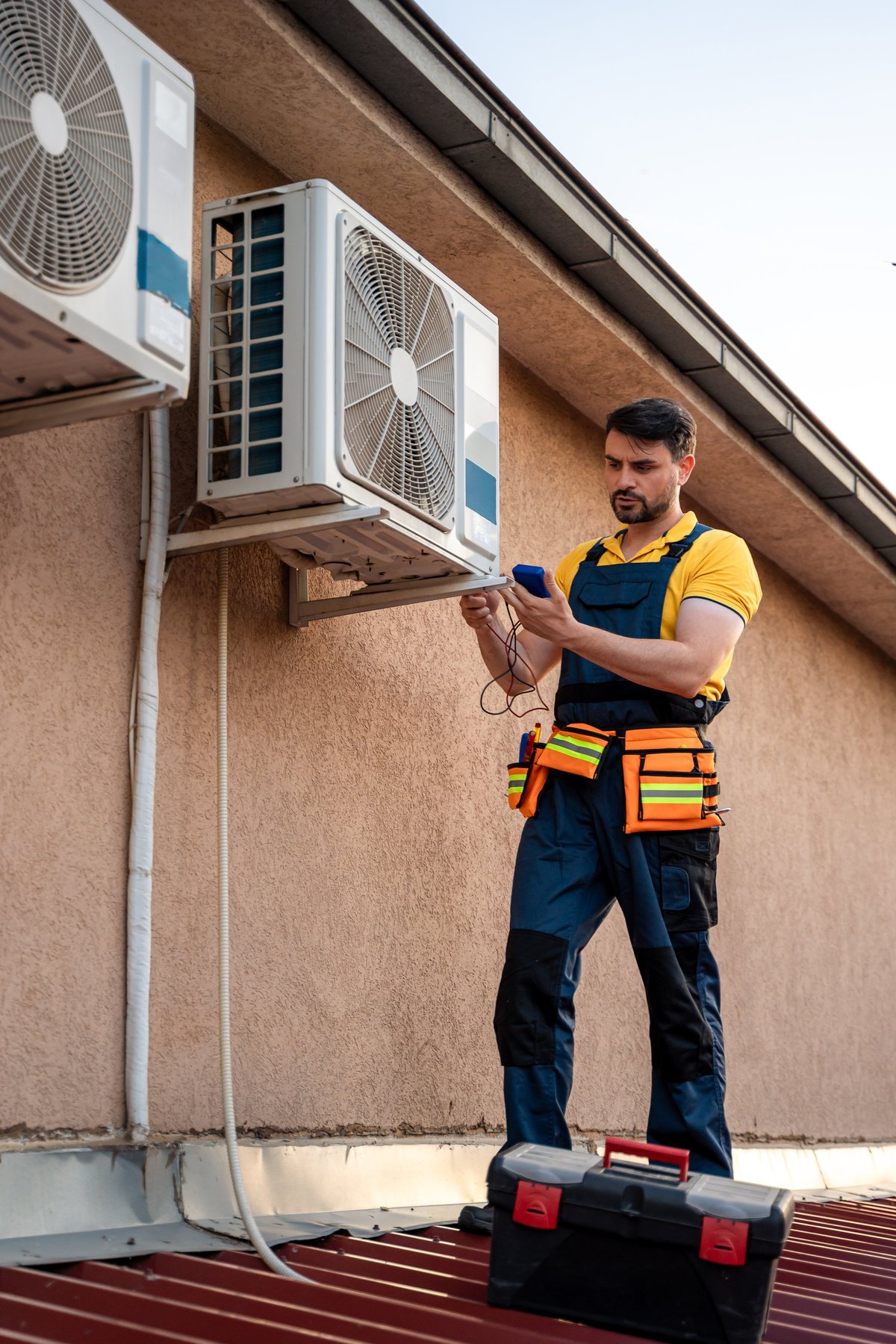
Everything Houston homeowners need to know about replacing their air conditioner or heat pump in 2026. Complete cost breakdowns, SEER2 efficiency ratings explained, best brands compared, available rebates, and how to avoid overpaying for a new system.
Quick Answer: What Does HVAC Replacement Cost in Houston?
In Houston and Montgomery County, a full central AC replacement costs $5,000–$12,500 for a standard single-stage system. Heat pump systems run $6,500–$15,000, and high-efficiency variable-speed systems cost $14,000–$20,000+. These prices include equipment, labor, permits, and startup. The wide range depends on system size (tonnage), SEER2 efficiency rating, brand, and whether ductwork modifications are needed. Most Houston homeowners spend $8,000–$12,000 for a quality 16–18 SEER2 system sized correctly for their home. With the new 2023 DOE efficiency standards and the ongoing R-410A phaseout, 2026 is a pivotal year for HVAC replacement decisions.
If you've been putting off replacing your aging AC, 2026 is the year to pay attention. Several major changes are reshaping the HVAC landscape, and Houston homeowners — who run their ACs harder than almost anyone else in the country — are directly affected.
First, the DOE's new efficiency standards took full effect in 2023, requiring all new residential central AC systems sold in the South (including Texas) to meet a minimum of 15.0 SEER2. That's a significant jump from the old 13 SEER minimum. What this means for you: entry-level systems are more efficient (and slightly more expensive) than they used to be, but they'll save you more on monthly energy bills.
Second, the R-410A refrigerant phaseout is accelerating. Starting in 2025, new equipment using R-410A faces production restrictions under the EPA's AIM Act. By 2026, manufacturers are transitioning to new low-GWP refrigerants like R-32 and R-454B. If you have an aging R-22 (Freon) system — and many Houston homes built before 2010 still do — finding and paying for R-22 has become nearly impossible, with prices hitting $100–$150 per pound. A typical system holds 6–12 pounds. Do the math: a simple refrigerant top-off could cost $600–$1,800 on a system that's already past its prime. At that point, replacement is the only sensible option.
Third, federal tax credits are still available through 2032 under the Inflation Reduction Act. You can claim up to $600 for qualifying AC systems and up to $2,000 for qualifying heat pumps. Combined with utility rebates from providers in the CenterPoint Energy territory, you could reduce your out-of-pocket cost by $800–$2,800. These incentives won't last forever.
Let's be completely transparent about pricing. These are real 2026 numbers based on the Houston and Montgomery County market — not national averages that don't reflect our climate or labor costs.
| System Type | SEER2 Rating | Typical Installed Cost | Best For |
|---|---|---|---|
| Basic Single-Stage AC | 15–16 SEER2 | $5,000–$8,000 | Budget-conscious replacement, rental properties |
| Mid-Range Single-Stage AC | 16–18 SEER2 | $8,000–$12,000 | Most Houston homeowners — best value pick |
| Two-Stage AC | 17–20 SEER2 | $11,000–$15,000 | Better humidity control, quieter, more even cooling |
| Variable-Speed (Inverter) AC | 18–24+ SEER2 | $14,000–$20,000 | Ultimate comfort, lowest energy bills, luxury homes |
| Heat Pump (All-Electric) | 15–24 SEER2 / 8–12 HSPF2 | $6,500–$15,000 | Heats AND cools, ideal for Houston's mild winters |
| Full System + New Ductwork | Varies | Add $4,000–$8,000 | Older homes with leaky, undersized, or damaged ducts |
| Mini-Split (Per Zone/Head) | 18–30+ SEER2 | $3,000–$6,500 per zone | Room additions, garage conversions, problem rooms |
Prices reflect 2026 installed costs for the Houston and Montgomery County market. Includes equipment, labor, refrigerant lines, electrical connections, condensate drain, permit, disposal of old equipment, and system startup. Prices vary based on home size, existing ductwork condition, accessibility, and equipment brand. Always get three quotes from licensed contractors.
Starting in 2023, the HVAC industry switched from SEER to SEER2 — and if you're shopping for a new system, you need to understand the difference. SEER2 uses a more realistic testing procedure that better reflects how systems perform in actual homes (higher static pressure, which accounts for ductwork resistance). For the same unit, the SEER2 rating is typically 0.5–1.0 points lower than the old SEER rating.
Here's what the numbers mean for your electric bill. In Houston, the average home runs its AC for approximately 2,000–3,000 cooling hours per year. Let's compare two systems for a typical 2,000-square-foot Montgomery County home:
| Metric | 15 SEER2 System | 20 SEER2 System |
|---|---|---|
| Installed cost | ~$6,500 | ~$15,000 |
| Annual cooling cost (est.) | ~$780 | ~$585 |
| Annual savings vs 15 SEER2 | — | ~$195/year |
| Simple payback on upgrade | — | ~43 years |
| Humidity control | Basic (on/off cycling) | Excellent (variable-speed, long run times) |
| Noise level | 72–76 dB | 55–62 dB (whisper-quiet) |
The takeaway: Don't buy a high-SEER2 system purely for the energy savings payback — the math rarely works in your favor over a 12–15 year system lifespan. Buy it for the comfort. Variable-speed systems maintain more consistent temperatures, control humidity far better (critical in Houston), and are dramatically quieter. If you're in your forever home, the comfort upgrade is worth every penny. If you plan to sell within 5–7 years, a 16–17 SEER2 system is your sweet spot — it's efficient enough to attract buyers without overspending on features you won't recoup.
Brand matters — but what matters more is the quality of the installation. A perfectly installed Goodman will outperform a poorly installed Trane every single time. That said, here's how the major brands stack up for Houston homeowners:
| Brand | Price Tier | Warranty | Best Feature for Houston |
|---|---|---|---|
| Trane | $$$$ | 10-year parts, 12-year compressor | Best durability; Spine Fin coil resists corrosion |
| Carrier | $$$$ | 10-year parts, 10-year compressor | Greenspeed Intelligence for precise humidity control |
| Lennox | $$$$ | 10-year parts, 10-year compressor | Highest SEER2 ratings available (up to 28) |
| American Standard | $$$ | 10-year parts, 12-year compressor | Same Trane engineering at lower price |
| Goodman | $$ | 10-year parts, lifetime compressor | Best value; excellent warranty at budget price |
| Daikin | $$$ | 12-year parts, 12-year compressor | Industry-leading inverter technology (owns Goodman) |
| Mitsubishi Electric | $$$ | 12-year parts, 12-year compressor | Gold standard for ductless mini-splits |
All warranties listed require professional installation and online registration within 60–90 days of install. Unregistered warranties typically drop to 5 years. Make sure your contractor handles the registration — it's a common oversight that costs homeowners thousands.
Heat pumps are gaining serious traction in Texas, and for good reason. A heat pump is essentially an air conditioner that can run in reverse — it both cools your home in summer and heats it in winter. Unlike a furnace that burns gas, a heat pump moves heat from one place to another, which is inherently more efficient.
In Houston's climate, heat pumps make enormous sense. Our winters are mild — we rarely see temperatures below 30°F, and modern cold-climate heat pumps maintain full efficiency down to 5°F or lower. That means you can heat your home without a gas furnace, potentially eliminating your gas bill entirely (if you also switch to an electric water heater and induction cooktop).
The numbers: a heat pump costs $500–$2,000 more upfront than a comparable AC-only system, but it replaces both your AC and your furnace. If your furnace is getting old too, replacing both with a single heat pump can actually save you money compared to replacing an AC and furnace separately. And the federal tax credit for heat pumps is up to $2,000 — significantly more than the $600 credit for AC-only systems.
For most Houston homeowners replacing both an aging AC and furnace, we recommend a cold-climate heat pump (17–20 SEER2). The $2,000 federal tax credit, combined with utility rebates, can bring the net cost close to that of a mid-range AC + furnace combo — and your heating bills will be 30–50% lower than with a gas furnace. If you have solar panels or are considering them, a heat pump is a no-brainer: free solar electricity powers your heating and cooling.
The price tag on the equipment is only part of the story. Several factors can swing your total installed cost by thousands of dollars:
Installing a new high-efficiency system onto old, leaky ductwork is a waste of money. If your ducts are over 20 years old, poorly sealed, crushed, or uninsulated, you should replace them during the HVAC install. Expect to add $4,000–$8,000. If your ductwork is in good shape but needs modifications (new supply plenum, return air adjustments), budget $1,000–$3,000. A reputable contractor will inspect your ducts with a camera during the estimate and be honest about whether they need work.
Never — and I mean never — let a contractor size your system based on square footage alone ("one ton per 500 sq ft"). That's guesswork, and it leads to oversized systems that short-cycle, fail to dehumidify, and wear out prematurely. A proper Manual J load calculation accounts for your home's square footage, window area and orientation, insulation levels, ceiling height, number of occupants, and even air leakage. It takes 30–60 minutes to do properly and should be included in any professional estimate. Anyone who won't do one doesn't deserve your business.
Is your air handler in a tight attic crawlspace? Is the condenser on the far side of the house with a long refrigerant line run? Is your electrical panel full and needs a sub-panel? These factors add labor hours and material costs. Attic installations in Houston's summer heat are brutal on installers — expect a premium for attic work during June–September. If possible, schedule your replacement for spring (March–May) or fall (October–November) when demand is lower and installers aren't rushing between jobs.
In Houston and most of Montgomery County, a mechanical permit is required for HVAC replacement. The permit costs $100–$300 and ensures the installation meets current building codes. Some contractors offer to skip the permit to save you money — don't do it. Unpermitted work can cause problems when you sell your home, may violate your homeowner's insurance policy, and won't qualify for manufacturer warranties or rebates. A legitimate contractor includes the permit in their quote.
There's real money available to offset the cost of an efficient HVAC replacement. Here's what Houston homeowners can access:
| Program | Amount | Requirements |
|---|---|---|
| Federal Tax Credit — AC | Up to $600 | SEER2 16+, must be primary residence |
| Federal Tax Credit — Heat Pump | Up to $2,000 | Must meet CEE highest tier efficiency |
| CenterPoint Energy Rebate | $200–$800 | SEER2 16+, varies by equipment type |
| Manufacturer Seasonal Rebates | $200–$1,500 | Spring/fall promotions, complete system only |
| Entergy Texas Rebate | $300–$700 | SEER2 16+, for Entergy customers in Conroe area |
A good HVAC contractor knows exactly which rebates apply and should include them as line items in your quote. If a contractor seems unaware of available rebates, that's a red flag — move on to the next one. Also note: to claim the federal tax credit, you'll need the manufacturer's AHRI certificate proving your system qualifies. Your contractor should provide this.
Not sure if you need a repair or a full replacement? Here are the clearest signs it's time to replace:
Compressors ($2,500–$4,000) and evaporator coils ($1,500–$2,500) are the heart of your system. If either fails on a 12+ year old system, replacement is almost always the right call.
If your system was installed before 2010, it likely uses R-22. At $100–$150/pound and 6–12 pounds per system, even a small leak becomes a financial emergency.
Compare this year's summer bills to 2–3 years ago (adjusting for rate changes). If your usage is up 25%+ and maintenance hasn't helped, declining efficiency is the culprit.
Some rooms are freezing while others are stuffy. Humidity stays above 60% even with AC running. These point to a system that's failing to distribute air properly — often due to aging equipment.
At some point, you're throwing good money after bad. If you've spent $2,000+ on repairs in recent years and the system is aging, those repair dollars would be better put toward a new system with a full warranty.
The quality of the installation matters more than the brand of equipment. Here's what to ask before you sign anything:
A professional HVAC replacement typically takes 1–2 days for a standard system (AC + furnace or heat pump + air handler). Here's what happens:
The crew should leave your home as clean as they found it. All old equipment, packaging, and debris should be removed. You should have cold air blowing from the vents and a clear understanding of how to operate your new system.
In Houston, your AC is not a luxury — it's essential infrastructure. When it fails during a 100°F heat wave, you're not just uncomfortable; you're in a genuine emergency. Emergency replacement during peak summer costs 15–25% more than planned replacement in spring or fall. Contractors are booked solid, you have limited equipment choices (whatever is in stock locally), and you'll likely end up with whatever the first available contractor offers — not necessarily the best system for your home.
If your system is 10+ years old, start researching now. Get quotes from at least three contractors. Compare equipment, warranties, and pricing. Check references. Understand the rebates you qualify for. Then schedule the replacement on your terms — not when the system fails on a Saturday afternoon in August and you're calling every HVAC company in Montgomery County hoping someone can come out before Tuesday.
A new HVAC system is a significant investment — likely the second or third most expensive purchase you'll make for your home after the mortgage itself and possibly a roof replacement. But a properly sized, professionally installed system will keep your family comfortable for 12–15 years, potentially cut your cooling costs by 30–50%, and eliminate the anxiety of wondering whether your AC will survive another Texas summer.
Whether you're planning an HVAC replacement as part of a home renovation, or just need a recommendation for a trusted licensed contractor, Burton Residential Services has been helping Montgomery County families for 40+ years. We serve Magnolia, The Woodlands, Tomball, Conroe, Pinehurst, and throughout Montgomery County.
Licensed & Insured • Serving Greater North Houston • Family-Owned & Operated