
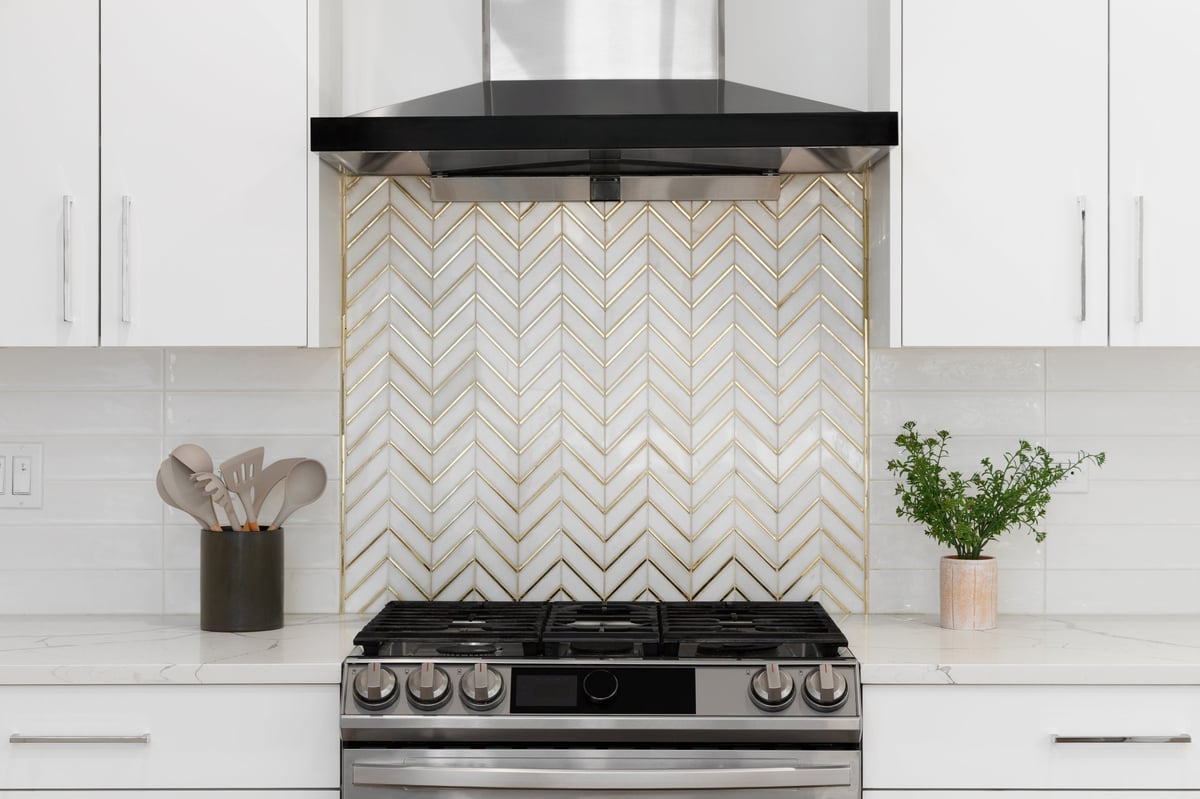
A backsplash has a practical job: protect the wall from splashes, cooking grease and everyday cleanup. It also connects your countertops, cabinets and lighting into one finished design.
If a kitchen update is on your list, explore our kitchen remodeling services and our guide to kitchen countertop costs and materials as you plan.
For homeowners in The Woodlands, Conroe, Montgomery, Magnolia, Willis and greater Houston, the right choice depends on more than appearance. Your budget, wall condition, cooking habits, grout preference and outlet locations all affect the finished result. Here's what to consider before choosing a backsplash.
Backsplash Materials: What Works for Your Kitchen?
Ceramic Tile
A versatile, budget-friendly choice. It comes in many colors and shapes, and is usually straightforward to clean.
Porcelain Tile
Dense and durable, with low water absorption. It works well in busy kitchens and is available in both tile and large-format options.
Glass Tile
Adds light and color. It can be less forgiving to install because cuts and setting material may show through; choose an installer experienced with glass.
Natural Stone
Marble, travertine and other stones offer distinctive variation, but may need sealing and more attentive care. Marble can etch when it contacts acidic foods and cleaners.
Marble or Other Stone Slabs
A continuous surface creates fewer grout lines and a dramatic look, particularly behind a range. Fabrication, handling and cutouts make slabs a different cost category from tile.
Zellige
Handmade tile has variation in color, shape and surface. That irregularity is part of its appeal, but it can make installation slower and cleaning less effortless.
Peel-and-Stick
It may suit some low-demand decorative applications, but check the product's heat, moisture and cleaning limits. Never assume it is appropriate behind a cooktop; the range manufacturer's clearances and the backsplash product instructions must both be followed.