
Home Blog Luxury Vinyl Plank Flooring Houston
Flooring Guide 2026

Luxury Vinyl Plank Flooring in Houston: Costs, Waterproof Options, and 2026 Guide

Compare LVP costs, waterproof options, installation methods, and flooring choices for Houston homes. Get practical advice for The Woodlands, Conroe, and nearby areas.

By Gary Burton
November 2, 2026
10 min read
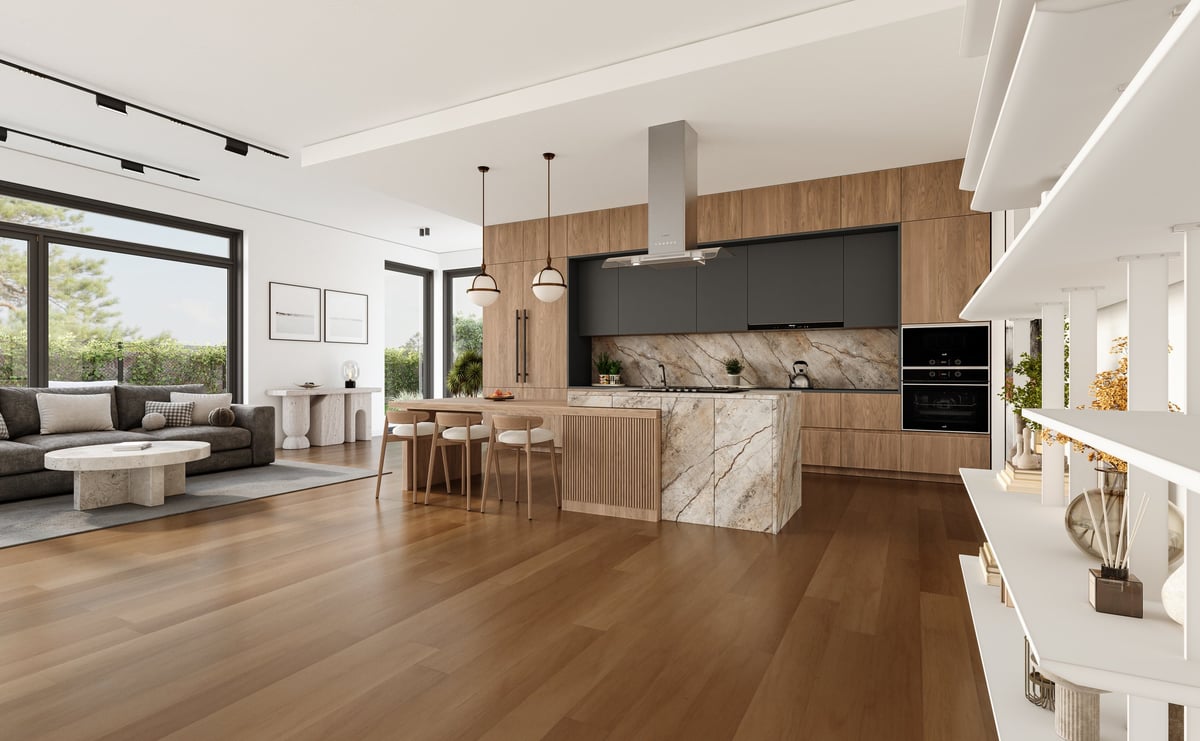
Open space living room and kitchen interior with large windows, gray sofa, dining table and hardwood flooring. Modern design solution, 3d rendering

Luxury vinyl plank (LVP) is a popular flooring choice for homeowners who want a wood-look finish with less worry about everyday spills and humidity. If you're considering flooring installation in Montgomery County, LVP is worth comparing with other materials before choosing. It can also work in some bathroom projects; review our bathroom remodeling services when planning a larger update.

This guide covers luxury vinyl plank flooring Houston homeowners may be weighing for kitchens, living areas, bathrooms, and busy family spaces, including cores, installation methods, cost, and common mistakes.

What is luxury vinyl plank?

LVP is a multi-layer resilient floor made to resemble wood. Its printed design layer provides the wood appearance, while a clear wear layer helps protect the surface from scuffs and everyday use. The wear layer is measured in mils; this refers to its thickness, not the total thickness of the plank.

Two common core types are:

SPC (stone plastic composite)

A dense, rigid core that can resist indentation and dimensional movement well. It is often chosen for high-traffic areas and installations over concrete slabs.

WPC (wood plastic composite)

A composite core that is generally thicker and can feel softer or warmer underfoot. Some products include an attached pad.

Both types can be marketed as waterproof, but product specifications vary. Waterproof planks do not make the room, subfloor, or installation watertight. Water can still get through seams or edges, and a damp slab needs to be addressed before installation.

Why LVP can suit Houston-area homes

In The Woodlands, Conroe, Montgomery, Magnolia, and Willis, seasonal humidity and concrete slab conditions deserve consideration when selecting flooring. LVP's resilient construction can be more forgiving of ordinary moisture exposure than wood-based flooring, and its surface is practical for homes with pets or frequent foot traffic.

That doesn't mean LVP should go over a wet, uneven, or moving slab. It is essential to check moisture and floor flatness before installation. If water is entering through the slab or there is active structural movement, resolve the underlying issue first.

For bathrooms, use a product specifically approved by its manufacturer for the intended room and installation conditions. Follow its instructions for waterproofing, transitions, and perimeter details.

2026 LVP flooring cost guide

Costs depend on the product, preparation, room layout, and installation method. These are planning ranges, not a project quote. Ask for a written estimate that separates flooring, labor, removal, and subfloor work.

Installation methodInstalled cost/sq ft500 sq ft project
Floating (click-lock)$4.50–$9.50$2,250–$4,750
Glue-down$5.50–$12$2,750–$6,000

As a broad guide, many floating installations fall around $4.50–$9.50 per sq. ft. installed before substantial repairs or upgrades. Glue-down projects may be roughly $5.50–$12 per sq. ft. installed, depending on product and preparation. A 500-square-foot floating project could therefore land around $2,250–$4,750 before unusual prep, removal, or other add-ons.

Floating or glue-down installation?

Click-lock floating floor

A floating floor's planks lock together and rest over the prepared subfloor without being bonded across the full surface. This is often a faster, economical option for residential rooms. It still needs a flat, clean, dry base and the manufacturer's required expansion space around walls and fixed objects.

Glue-down floor

With glue-down installation, planks are bonded to an approved substrate. This can suit certain large or high-traffic areas, but the slab must meet the adhesive's moisture and preparation requirements. The installation also depends on correct adhesive selection, application, and cure time.

Never choose a method just to conceal a subfloor problem. Your flooring professional should check the product instructions and site conditions before recommending floating or glue-down installation.

Subfloor, acclimation, and sound: details that matter

A successful installation starts below the planks. The subfloor must be structurally sound, clean, dry, and flat within the product's stated tolerance. A rigid SPC plank may make dips or high spots more noticeable, so leveling or repairs may be necessary.

Follow the specific product's guidance for temperature, humidity, and acclimation. Requirements vary: some products call for time in the conditioned room before installation, while others specify different handling. Don't assume every LVP product needs the same acclimation period. For an example of manufacturer guidance, consult Shaw's WPC installation guidelines.

Sound also depends on the product and the home. An attached pad may reduce some impact noise, but it does not replace a separate underlayment unless the manufacturer approves one. Extra layers can interfere with a locking system or affect warranty coverage, so confirm compatibility first.

LVP vs. laminate vs. hardwood

For lvp vs laminate Houston homeowners should consider, the key distinction is how the materials respond to moisture: laminate's wood-based core may swell if water gets through its joints, while many LVP products are designed to tolerate water on the plank surface. Hardwood offers the option of refinishing, but it requires more care around moisture and indoor conditions.

LVP

Most forgiving of everyday moisture; wear layer drives durability.

Laminate

Wood-based core can swell if water reaches the joints.

Hardwood

Refinishable, but needs closer moisture and indoor-condition control.

Maintenance and mistakes to avoid

Use a soft broom or vacuum suitable for hard floors, and clean with a product approved for your flooring. Wipe spills promptly even when the product is labeled waterproof. Use felt pads under furniture and avoid dragging heavy items across the surface.

Common installation problems include:

1

Skipping moisture tests

A waterproof plank does not correct moisture coming through a concrete slab.

2

Ignoring flatness

Low and high spots can stress joints or cause the floor to feel uneven.

3

Leaving no expansion gap, or pinning the floor in place

Follow the product's exact perimeter and transition requirements.

4

Adding unapproved underlayment

It may affect locking performance or warranty terms.

5

Choosing by price alone

Consider wear-layer thickness, core type, warranty details, and the preparation included in the quote.

Frequently asked questions

Ready to Upgrade Your Flooring?

Get a free, no-obligation estimate. We'll help you choose an LVP product and installation plan suited to your home and subfloor. Serving Montgomery County for 40+ years.

Serving Montgomery County, The Woodlands, Conroe, Magnolia & Greater Houston