Houston-area homes face a constant battle with humidity, pollen, algae, mold, and mildew. A professional pressure washing service in Houston can restore driveways, patios, walkways, and other durable surfaces, but the wrong method can damage siding, paint, wood, or roofing. Your cleaning plan should match the surface, not simply use the highest pressure available.
For homeowners in The Woodlands, Conroe, Montgomery, Magnolia, and Willis, regular exterior maintenance helps protect curb appeal and prevent small stains from becoming permanent damage.
If you are preparing to sell, addressing an HOA notice, or maintaining a recently remodeled home, professional Home Cleaning services can be coordinated with your exterior project for a more complete result — refreshing the inside and outside of your property together.
1. Soft Washing vs. High-Pressure Washing
The most important decision is choosing the right cleaning method. The two approaches are not interchangeable — each protects different materials.
Soft Washing
Low water pressure plus specialized cleaning solutions to loosen and remove organic growth. The preferred method for:
- Vinyl, fiber-cement, aluminum, and painted siding
- Stucco and other textured wall finishes
- Asphalt shingle, tile, and metal roofs
- Painted trim, fascia, doors, and garage doors
- Wood fences, decks, and delicate outdoor surfaces
Soft washing is especially effective against mold, mildew, algae, lichen, and black roof streaks. The cleaning solution does the main work, while the low-pressure rinse reduces the risk of forcing water behind siding or under roofing materials.
High-Pressure Washing
Appropriate for durable, ground-level surfaces such as:
- Concrete driveways and garage floors
- Sidewalks and walkways
- Brick and paver patios
- Masonry retaining walls
- Pool decks made from suitable concrete or masonry
- Dumpster pads and other heavily soiled hardscapes
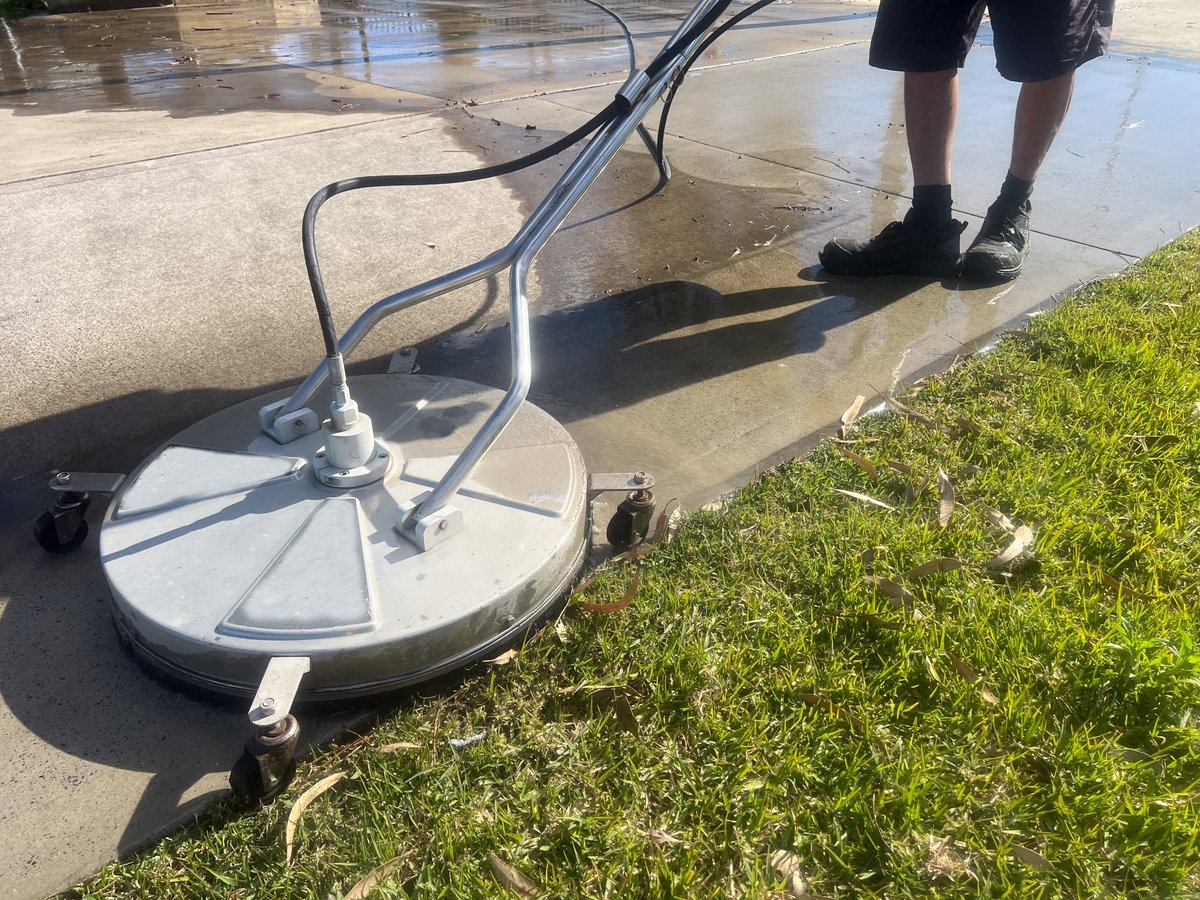
A surface cleaner can help produce an even result on concrete. However, excessive pressure can etch concrete, remove joint sand from pavers, or leave visible streaks. High pressure is not automatically better.
2. What You Should Never Pressure Wash With High Pressure
Some surfaces require special caution. High pressure should never be used casually on the following:
Asphalt shingle roofs — high pressure can remove protective granules
Stucco — can crack or lose its surface coating
Painted wood — can strip paint and expose the substrate
Old or soft wood decking and fencing — grain raises and boards can splinter
Window screens and fragile seals — screens tear and seals fail
Electrical fixtures, outlets, and exterior equipment — serious safety risk
Damaged mortar joints or deteriorated brick — can accelerate masonry failure
Water forced behind siding can lead to hidden moisture problems.
On painted surfaces, pressure can create chips and peeling that require repainting. Roof cleaning is a particular concern: black streaks may look like dirt, but they are often algae and should be treated with a roof-safe soft-wash process.