Range Hood Installation Houston: Styles, CFM & Costs 2026
Range Hood Installation Guide 2026

Range Hood Installation in Houston: Styles, CFM Sizing, and Costs

A range hood does more than complete the look of your kitchen. The right hood removes smoke, grease, heat, moisture, and cooking odors before they spread through your home. Learn what to consider in 2026.

By Gary Burton
October 9, 2026
8 min read
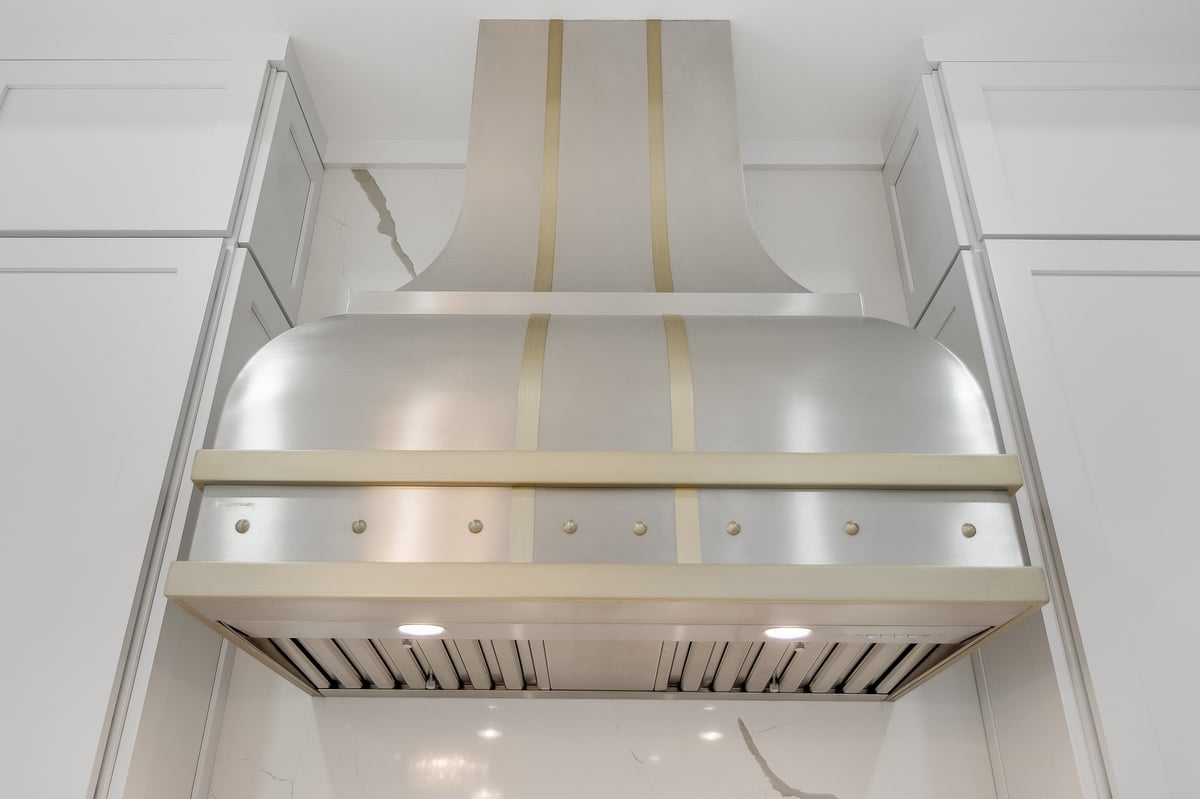
A large, custom kitchen vent hood

A range hood does more than complete the look of your kitchen. The right hood removes smoke, grease, heat, moisture, and cooking odors before they spread through your home. It can also help protect cabinets, walls, ceilings, and indoor air quality.

But choosing the right hood is not as simple as matching the finish to your range. Your kitchen layout, gas range output, duct path, cabinet design, and available ceiling space all affect the installation.

If you are planning range hood installation in Houston, The Woodlands, Conroe, or nearby Montgomery County communities, this guide explains what to consider in 2026.

Ducted vs. Ductless Range Hoods

Ducted Hoods

A ducted hood pulls cooking air through a filter and exhausts it outdoors through a wall or roof. For most gas ranges, a ducted system is the preferred solution because it removes heat, moisture, smoke, and combustion byproducts from the home instead of sending filtered air back into the room.

Advantages include:

  • Better removal of heat, smoke, and grease
  • More effective odor control
  • Improved performance for high-heat cooking
  • Less moisture released into the kitchen
  • Better long-term protection for cabinets and painted surfaces

A ducted hood requires proper exterior venting. The duct should use smooth, rigid metal where possible, with the shortest practical route and the fewest bends.

Ductless Hoods

A ductless, or recirculating, hood filters kitchen air and returns it to the room. These systems are easier to install when exterior venting is impossible, such as in some apartments or interior kitchen layouts.

However, a ductless hood does not remove heat or moisture from the home. Charcoal filters also require regular replacement, and grease filters must be cleaned according to the manufacturer's instructions.

Warning: A ductless hood is not an equal substitute for a properly sized ducted hood over a high-output gas range. It may be a practical fallback, but it should not be selected without considering your cooking habits and ventilation limitations.

Common Range Hood Styles

Under-Cabinet Hoods

Under-cabinet hoods fit beneath an upper cabinet. They are common in existing kitchens and are often the simplest option for a replacement project.

They work well when:

  • Your range is positioned against a wall
  • Upper cabinets are already installed
  • An existing duct is available
  • You want a more compact appearance

The main challenge is limited space. Cabinets, electrical wiring, backsplash materials, and ductwork may all compete for the same area.

Wall-Mount Chimney Hoods

Wall-mount hoods are installed above a range without an upper cabinet directly above them. Their chimney cover conceals the duct connection and creates a strong visual focal point.

They are a popular choice for kitchen remodels because they offer:

  • A larger capture area
  • Strong visual impact
  • Flexible stainless steel, black, or custom finishes
  • Easier access to the hood body for service

A wall-mounted hood is usually most efficient when installed on an exterior wall. An interior-wall installation may require ductwork through a soffit, ceiling cavity, attic, or roof.

Island Hoods

Island hoods hang from the ceiling above a cooktop or range located in a kitchen island. Since air can escape from all sides, island hoods generally require a wider capture area and careful CFM planning.

Installation may involve:

  • Ceiling framing reinforcement
  • A concealed vertical duct chase
  • Longer duct runs
  • Roof or exterior-wall penetration
  • Additional electrical work
  • Careful alignment with the island and cooktop

Island ventilation is one of the most involved types of range hood installation in Houston. It should be planned before cabinets, countertops, and ceiling finishes are finalized.

Insert or Cabinet-Enclosed Hoods

An insert is installed inside a custom hood surround or cabinet enclosure. This provides a built-in appearance while allowing the blower and filters to remain concealed.

The enclosure must be designed around the insert's exact dimensions. Cabinet depth, access panels, duct size, electrical connections, and heat clearances must be coordinated before fabrication.

How Much CFM Does a Gas Range Need?

CFM means cubic feet per minute. It measures how much air the hood can move. For gas ranges, a common planning rule is approximately 1 CFM per 100 BTUs of total burner output.

~400

CFM

40,000 BTU range

~500

CFM

50,000 BTU range

~600

CFM

60,000 BTU range

For a typical 30- to 36-inch gas range, many Houston-area homes fall in the 400–700 CFM range for a wall-mounted or under-cabinet ducted hood. Island hoods or long duct runs may require approximately 500–900 CFM or more, depending on the manufacturer's specifications and the cooking setup.

CFM is not the only factor. A powerful blower connected to undersized or poorly routed ductwork may be loud and ineffective.

Your contractor should also evaluate:

Range width
Total BTU output
Hood width and capture area
Duct diameter
Duct length
Number of elbows
Wall or roof termination
Whether makeup air is required
Local permitting and mechanical requirements

The hood should generally be at least as wide as the cooking surface. In many installations, a hood that is slightly wider provides better capture. For general installation considerations, The Home Depot's range hood installation guide also emphasizes checking CFM, vent direction, wiring, obstructions, and local building requirements.

Cabinet and Ceiling Venting Challenges

A new hood installation becomes more complex when the kitchen was not originally designed for exterior ventilation.

Cabinet Limitations

Under-cabinet and insert hoods may require modifications to:

Cabinet bottoms
Cabinet backs
Shelves
Crown molding
Soffits
Electrical junction boxes
Backsplash areas

Never cut into a cabinet or wall until the location of studs, plumbing, electrical wiring, and existing ductwork has been confirmed.

Ceiling and Roof Venting

Island and interior-wall hoods frequently require ductwork through the ceiling. The duct may need to pass between joists or through attic space before reaching an exterior termination.

Roof venting requires careful flashing and weatherproofing. In Houston and surrounding areas, a roof penetration must be sealed properly against heavy rain, wind-driven water, and long-term humidity.

Non-negotiable: Do not vent a range hood into an attic, wall cavity, crawl space, or garage. Exhaust must terminate outdoors according to applicable code and manufacturer requirements.

2026 Range Hood Installation Costs in Houston

The cost of range hood installation depends heavily on whether an existing duct and electrical connection can be reused. Typical 2026 planning ranges include:

Installation Scenario Typical Planning Range
Replacement hood, existing duct & electrical Approximately $600 – $1,500
New ducted hood with short exterior-wall vent Approximately $1,200 – $2,500
Island hood with ceiling duct & roof penetration Approximately $2,500 – $5,000+
High-CFM system with cabinet modifications & makeup air Approximately $3,000 – $6,000+

These are planning ranges, not fixed quotes. The hood itself, premium finishes, high-CFM blowers, cabinet modifications, electrical work, drywall repair, attic access, and roof work can all affect the final price.

A straightforward replacement is usually much less expensive than adding ventilation to a kitchen that has never had a ducted hood. During a remodel, it is often more efficient to plan the ductwork before the cabinets and ceiling are completed.

Burton Residential Services can coordinate the related work through our kitchen remodeling services, including cabinetry, countertops, electrical updates, drywall repair, painting, and finish carpentry.

How to Plan Your Installation

Before purchasing a hood, gather these details:

Range or cooktop width
Total gas BTUs
Wall, island, or peninsula location
Existing duct size and route
Exterior wall or roof access
Ceiling height
Cabinet dimensions
Available electrical connection
Preferred hood style and finish

A professional assessment can identify problems before they become expensive. It also helps ensure your hood, cabinets, backsplash, lighting, and ceiling treatment work together as one design.

Frequently Asked Questions

Ready to Improve Your Kitchen Ventilation?

Ready to plan your range hood installation in Houston or Montgomery County? Get a free, no-obligation estimate. We'll help you choose the right hood style, CFM range, duct path, and finish for your kitchen. Serving Montgomery County for 40+ years.

Serving Montgomery County, The Woodlands, Conroe, Willis & Greater Houston