Planning a retaining wall in Houston? Compare 2026 material costs, drainage requirements, clay-soil preparation, movement concerns, and permitting.
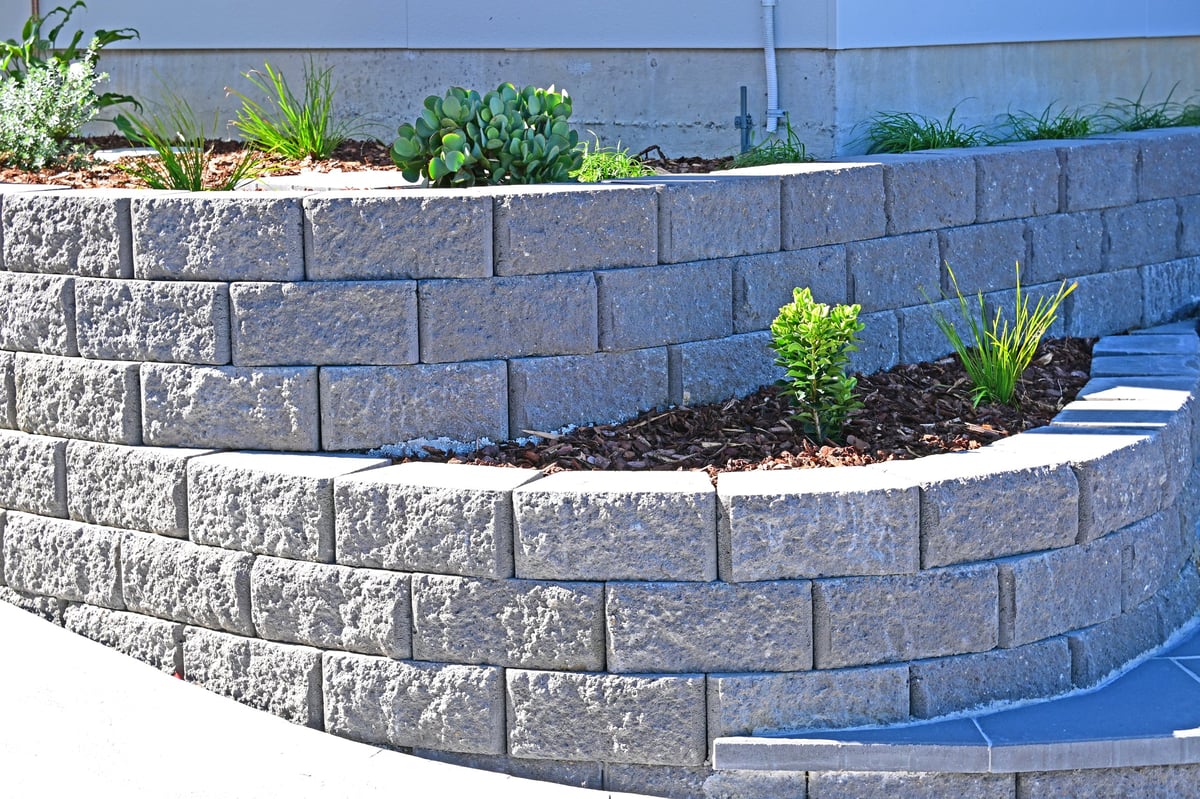
A retaining wall holds soil in place when there is a meaningful change in elevation. You may need one if your property has:
A retaining wall is not simply a decorative landscape border. It must resist the sideways pressure of soil, water, and any weight above it. A driveway, shed, pool deck, parked vehicle, or home near the top of the wall creates what contractors call a surcharge load.
Non-negotiable: Never build a tall or load-bearing retaining wall based only on appearance. The height, soil conditions, drainage design, base preparation, and nearby structures must be evaluated together.
Houston-area properties commonly contain clay soils that hold water and change volume as moisture levels rise and fall. During wet periods, clay expands. During dry periods, it shrinks. This expansive movement can place pressure on a retaining wall and create:
Expansive clay can push a wall out of plumb over time.
Concrete and masonry are less forgiving of movement.
Soft or saturated subgrade can't carry the load.
Clogged or missing drains trap water behind the wall.
Shrinking clay pulls away, creating voids and instability.
Water finds the path of least resistance around the ends.
The solution is not simply choosing a stronger wall material. A reliable retaining wall in Houston depends on controlling water and creating a stable base. Base preparation should include:
| Step | Why It Matters |
|---|---|
| Excavating unsuitable soil | Soft, organic, or saturated soil should not serve as the wall foundation. |
| Installing a compacted aggregate base | Crushed stone provides a stable, level surface and helps manage water beneath the wall. |
| Compacting in controlled lifts | Backfill and base material should be compacted in layers rather than placed all at once. |
| Using free-draining backfill | Gravel or clean crushed stone behind the wall reduces hydrostatic pressure — the force created when water builds up behind the wall. |
| Separating clay from drainage stone | Filter fabric helps prevent fine clay particles from migrating into and clogging the drainage zone. |
Your material choice affects cost, appearance, lifespan, flexibility, and how the wall responds to Houston's expansive soil. These are planning ranges for typical residential work in the Houston area. Access, wall height, engineering, demolition, excavation, drainage outlets, reinforcement, and finish selections can significantly affect the final estimate.
Segmental retaining wall block is often the best balance of performance and cost for residential properties with expansive clay. The blocks interlock, and the wall can be reinforced with geogrid extending back into the compacted soil.
This modular construction allows limited movement without the same cracking pattern associated with a rigid concrete wall. It is also easier to repair because individual blocks can be replaced.
For many homeowners, a properly engineered segmental block wall with drainage and geogrid provides the most practical solution.
Poured concrete creates a clean, relatively thin wall and may be appropriate where space is limited. It can work well near a driveway, foundation, pool deck, or other area where a structural wall is needed.
However, concrete does not tolerate uncontrolled movement as well as a modular system. Reinforcement, footing design, soil preparation, and drainage are essential.
A concrete wall built against wet clay without a functioning drainage system is at risk of cracking, bowing, or shifting.
Timber retaining walls can make sense for a low, non-critical garden wall where budget is the primary concern. They are usually not the best long-term choice for wet Houston soil.
Even treated lumber can eventually experience decay, insect damage, warping, and fastener corrosion.
Timber should not be selected simply because it has the lowest initial price. Consider the expected service life and future replacement cost.
Natural stone offers a high-end appearance and can perform well when designed to let water pass through the wall. Dry-stack and boulder-style walls can be especially effective for landscape applications.
Stone walls are typically thicker and require more labor. Taller stone walls may still need engineering, reinforcement, or a concealed structural system.
Natural stone is an excellent choice when appearance, durability, and landscape integration are priorities.
Water is one of the most common causes of retaining wall failure. Saturated clay becomes heavier, and trapped water increases pressure against the wall. A properly designed drainage system may include:
Warning: Do not backfill directly with native Houston clay and assume the wall will drain properly. Clay can hold water against the wall and clog drainage paths over time.
The top of the wall should also be protected from concentrated runoff. If a hill, downspout, or paved surface sends water toward the wall, the drainage design must account for that flow.
For a wall measuring 4 feet high by 50 feet long, the visible wall area is approximately 200 square feet. Estimated installed ranges could be:
These figures do not guarantee a project price. A wall with difficult access, extensive excavation, a deep footing, engineering, geogrid, drainage connections, or surcharge loads may exceed these ranges. A professional estimate should identify the wall dimensions, material, base design, drainage method, excavation requirements, finish, and permitting responsibilities.
The City of Houston generally lists residential retaining walls up to 4 feet as work exempt from a building permit. Walls over 4 feet typically require a permit and engineered plans.
You should verify the requirements for your exact property before construction because rules may change based on:
The City of Houston Permitting Center is the appropriate starting point for properties within Houston. Homeowners in Montgomery County should also confirm requirements with their local jurisdiction. Permit rules can differ between Conroe, The Woodlands, Magnolia, Montgomery, Willis, and unincorporated county areas.
Non-negotiable: If a wall is close to the 4-foot threshold, supports a driveway or structure, or is showing signs of failure, have the design reviewed before work begins.
For many Houston-area homeowners, a segmental concrete block wall with granular backfill, a base drain, and geogrid reinforcement offers the strongest combination of flexibility, durability, and cost control.
When you need a narrow structural wall or must integrate the wall with nearby construction.
For limited, low-height applications where a shorter service life is acceptable.
When landscape appearance and long-term durability justify the additional investment.
The right choice depends on your grade, soil, drainage, access, budget, and local requirements — not material price alone.
For related exterior improvements, review Burton Residential Services' complete home services, including patio covers, decks, fencing, and exterior repairs.
Ready to plan a retaining wall that handles Houston-area clay soil and drainage challenges? Get a free, no-obligation estimate. We'll help you choose the right materials, identify site concerns, and plan durable exterior improvements. Serving Montgomery County for 40+ years.
Serving Montgomery County, The Woodlands, Conroe, Willis & Greater Houston