
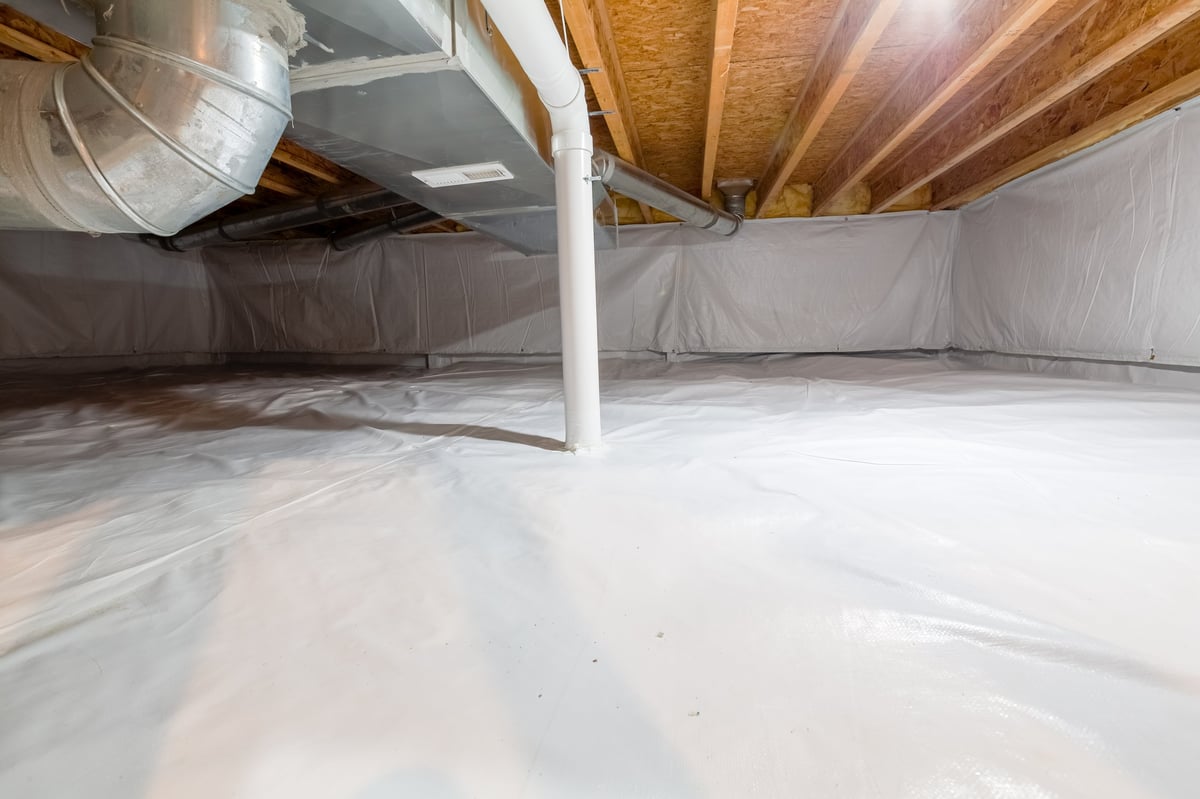
Houston-area moisture problems can start beneath your floors. If your home has a crawlspace, a ground vapor barrier can help limit moisture rising from the soil. For broader repair needs, explore our home repair services and flooring installation.
The right solution depends on the condition of your crawlspace. A basic ground cover is not the same as full encapsulation, and neither will fix standing water or poor drainage on its own. Here's what to look for and how to compare a vapor barrier installation in Houston.
1. What a crawlspace vapor barrier does
A vapor barrier is a sheet of plastic installed over exposed soil to slow water vapor from entering the crawlspace. A properly installed system covers the ground continuously, with seams overlapped and sealed. Depending on the scope and applicable code, it may also extend up the foundation walls and around support piers.
That separation can help lower crawlspace moisture and reduce the risk of damp conditions affecting the floor framing. The subfloor, the structural layer directly beneath your finished flooring, can be vulnerable to prolonged moisture. When moisture reaches the wood above, it can contribute to musty smells, deterioration, and repairs to flooring or framing.
A barrier is not a waterproofing system. It cannot stop water flowing into the crawlspace, correct poor grading, or repair rot that has already occurred.
2. Why Houston-area homes need moisture control
Houston's warm, humid weather, heavy rain, and clay-rich soils can create challenging conditions beneath a raised home. Clay soil absorbs water and expands when wet, then shrinks as it dries. Poor drainage, downspouts that discharge beside the house, or areas where water pools can increase moisture around the foundation and crawlspace.
These conditions affect homes throughout The Woodlands, Conroe, Montgomery, Magnolia, Willis, and greater Houston. A barrier can reduce moisture moving up from the soil, but managing exterior runoff is essential for a lasting result.
3. Signs to check for
Consider having your crawlspace assessed if you notice:
Musty or damp odors, especially near the floor
Visible mold or persistent dampness beneath the home
High indoor humidity that is difficult to control
Wood rot, damaged insulation, or soft spots in flooring
Pest activity, which can be attracted to damp areas
Standing water or muddy soil after rain
These signs do not prove a vapor barrier is the only fix. A contractor should look for plumbing leaks, drainage problems, active water entry, and existing damage before recommending a system.
4. Basic vapor barrier or full encapsulation?
🛡️ Basic Vapor Barrier
Generally covers the crawlspace ground. Can be a suitable part of moisture management when the space remains vented and there is no significant water intrusion. The quality of the installation matters: loose, torn, or poorly overlapped plastic leaves gaps for moisture.
🏠 Full Encapsulation
A more complete approach: a durable liner over the ground, sealed seams, coverage up foundation walls and around piers, and treatment of vents and other openings as part of a planned moisture-control system. A dehumidifier may also be needed.
Closing vents or sealing a crawlspace is not a casual add-on. Building-code requirements vary by jurisdiction and by the type of system. Confirm current requirements with your local building department before work begins. The 2018 International Residential Code, for example, describes continuous ground coverage and moisture-control provisions for unvented crawlspaces; it is a model code, not confirmation of the rules currently adopted for your address.
5. Choosing 6-mil, 10-mil, or 20-mil material
"Mil" describes the liner's thickness: one mil is one-thousandth of an inch. Thicker material is generally more resistant to punctures, but thickness alone does not determine whether the whole system is appropriate.
6-mil
Basic ground coverage. Lighter duty, less puncture resistance.
10-mil
Middle ground. Common choice for crawlspace ground liners.
20-mil
Reinforced, heavier liner for longer-term durability.
In humid Southeast Texas, homeowners often compare reinforced, heavier liners for longer-term durability. Ask for the exact material specification, reinforcement details, seam treatment, wall attachment, and warranty in writing. Do not assume a thicker liner alone solves water intrusion.
6. 2026 Houston-area installed cost ranges
Prices depend on crawlspace size, access, cleanup, moisture damage, liner type, and whether the project includes equipment or drainage. These are planning estimates, not a quote.
| Scope | Range | Notes |
|---|---|---|
| Basic ground barrier | $1.73–$4.61 / sq ft | Ground coverage only, vented crawlspace |
| Heavier reinforced liner | Higher per sq ft | More puncture resistance, longer service life |
| Full encapsulation | Higher overall | Walls, piers, vents, sealed seams |
| Dehumidifier add-on | Separate line item | Sizing and condensate drain required |
Estimates can increase if the crawlspace needs debris removal, mold remediation, standing-water management, insulation removal, or structural repairs. Low clearance and difficult access can also affect labor costs. Get itemized estimates that show the liner thickness, covered area, wall and pier treatment, vent scope, equipment, drainage, exclusions, and warranty.
7. Drainage and dehumidification matter
Before installing a liner, identify where water is coming from. Check for leaking pipes, downspouts discharging near the foundation, poor yard slope, and pooling after rain. Correcting exterior drainage may require a separate project; a vapor barrier should not be expected to manage active water entry. For yard drainage background, see our guide to French drains in Houston.
A dehumidifier may be part of a sealed-crawlspace plan, particularly when humidity remains high. It needs appropriate sizing, a reliable condensate drain, and routine maintenance. The system should be designed for the conditions in your crawlspace, not selected solely by a generic square-foot estimate.
8. Protect flooring by addressing moisture at its source
A crawlspace liner can help limit ground moisture, but it cannot reverse subfloor damage or stop a plumbing leak. If floors feel soft or bouncy, wood looks deteriorated, or odors persist after installation, investigate further. Sealing over wet materials or ignoring standing water can trap a problem rather than solve it.
The non-negotiable step is to inspect first, correct water sources, and choose a system that meets local code. A professional assessment helps you compare a basic barrier with encapsulation and understand which repairs may be needed before installation.