
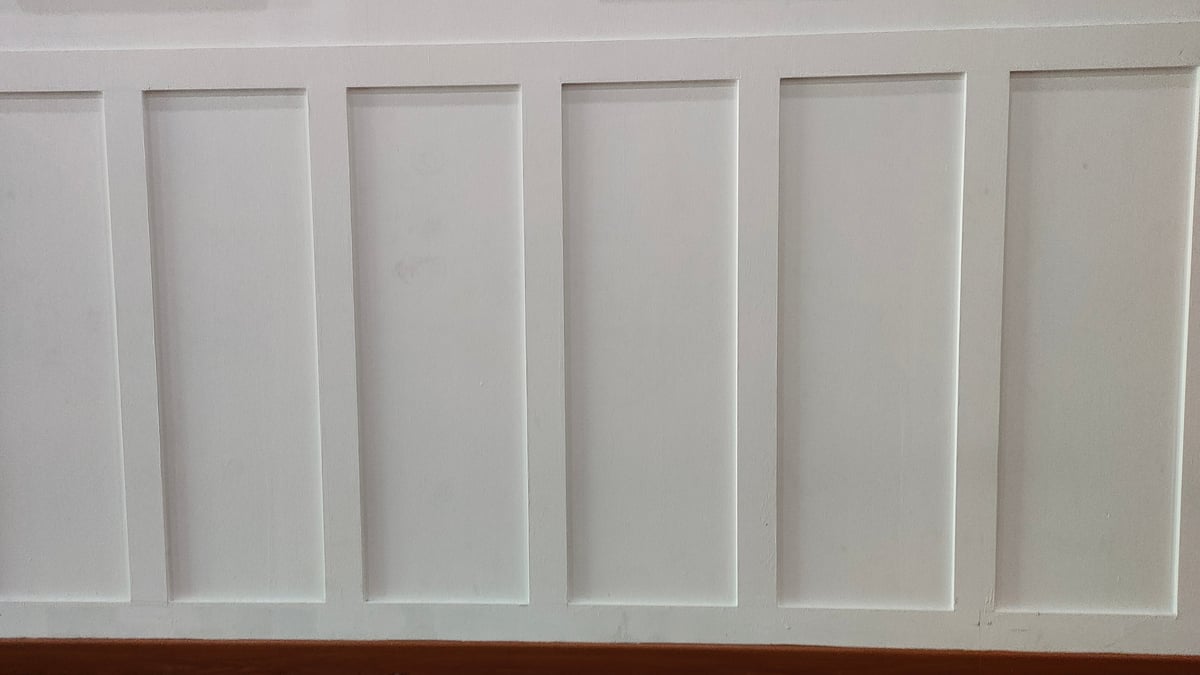
A well-planned wall treatment can add character, protect high-traffic walls, and make a room feel finished. If you're considering wainscoting installation in Houston, start by matching the panel style and material to the room, your home's architecture, and Southeast Texas humidity.
Our custom carpentry services can help you plan the details, while interior painting brings the finished panels and accent walls together.
Wainscoting is decorative paneling installed on the lower part of a wall. It commonly reaches 36 to 48 inches high, though the right height depends on your ceiling, trim, furniture, and the look you want. It can stand on its own or pair with an accent wall, wallpaper, or shiplap elsewhere in the room.
Choose a style that suits the room
The most common wainscoting styles each create a different impression:
Raised panel
Traditional, dimensional panels that suit formal dining rooms, entryways, and homes with classic trim.
Flat or Shaker panel
Clean, simple rectangles that work well in transitional and modern interiors.
Board-and-batten
Vertical battens create a structured pattern. It can look crisp and contemporary or relaxed and farmhouse-inspired, depending on spacing and finish.
Beadboard
Narrow vertical grooves create a cottage or coastal feel. It's often used in hallways, mudrooms, bathrooms, and casual dining spaces.
Wainscoting is especially practical in entryways, hallways, dining rooms, and stair runs, where walls can take bumps and scuffs. For stairs, the panels need to follow the slope cleanly, so careful layout and cutting are essential.
Set the height and chair rail thoughtfully
A typical installation is 36 to 48 inches high. A chair rail, the trim that caps the paneling, often sits near the top. There is no single correct height: the line should work with the room's proportions and avoid awkwardly meeting window trim, switch plates, or other features.
Before installation, measure the whole room and mark the planned top line on every wall. Check the layout from doorways and other main sightlines. That simple step helps you spot a height that looks uneven before any materials are cut.
Pick materials for Houston's climate
MDF
A smooth, paint-friendly option for dry interior spaces and can be cost-effective for flat panels or board-and-batten. It should be primed and sealed properly, and it is not the right choice for areas likely to experience repeated moisture.
Solid wood
Offers a natural grain that can be painted or stained. It can also move as indoor conditions change, so proper acclimation, installation, and finishing matter.
PVC or composite
Can be a practical choice in rooms with more moisture exposure, such as a bathroom or laundry area. It resists swelling better than untreated wood products, but the installation still needs to account for the room's conditions.
In The Woodlands, Conroe, Montgomery, Magnolia, Willis, and greater Houston, humidity makes material selection and finishing more than cosmetic decisions. Never install paneling over an active leak or damp wall. Resolve the moisture problem first.