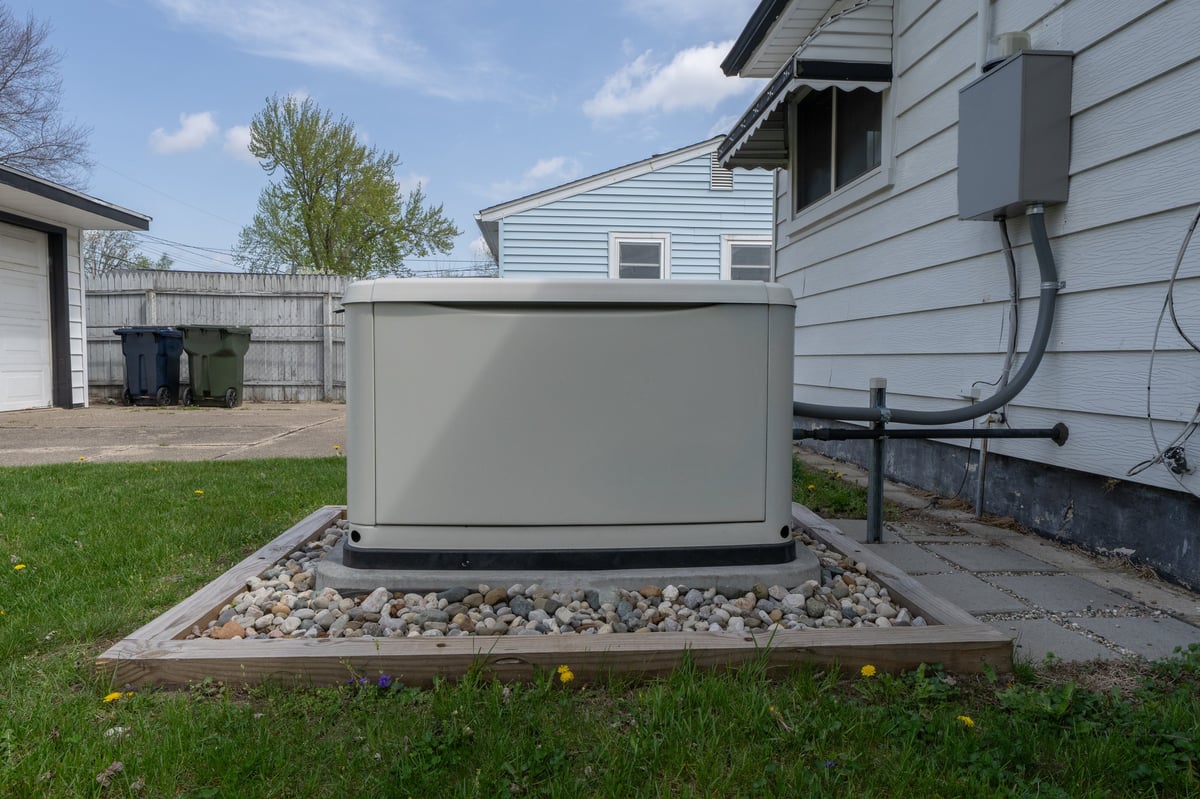
Houston power outages can happen during hurricanes, thunderstorms, extreme heat, and winter weather. A whole-home standby generator can keep your air conditioning, refrigerator, security system, lights, and other essential systems operating when utility power fails.
But choosing the right system involves more than buying the largest generator available. Your home's electrical load, fuel source, available installation space, neighborhood rules, and local permits all matter. Here is what you should know before planning whole home generator installation in Houston.
At Burton Residential Services, we help Montgomery County homeowners coordinate electrical work, HVAC-related improvements, and remodeling throughout The Woodlands, Conroe, Willis, Magnolia, and greater Houston. This is an educational guide to what actually goes into a safe, dependable backup power system.
1. Standby vs. Portable Generators
⚡ Standby Generators
Permanently installed outside your home and connected to natural gas or propane. Works with an automatic transfer switch that detects an outage, starts the generator, and moves your home's electrical load to the backup system.
The better choice when you want:
- Automatic operation during an outage
- Backup power for central air conditioning
- Long-duration operation without gasoline refueling
- A permanent, professionally installed solution
- Coverage for multiple appliances and household systems
🔌 Portable Generators
Less expensive and can provide backup power for selected appliances. However, they require manual setup, refueling, and connection through a properly installed transfer switch or interlock.
A portable unit generally cannot run central air conditioning, electric water heating, cooking appliances, laundry equipment, and other large loads at the same time.
Non-negotiable safety warning
Never connect a portable generator directly to a household outlet or electrical panel without approved transfer equipment. Improper connections can cause backfeeding, fires, serious injury, or death.
2. How to Size a Generator for a Houston Home
Generator sizing is based on electrical demand, not square footage alone. A 2,000-square-foot home with gas appliances may require less capacity than a smaller all-electric home with two air-conditioning systems. A qualified installer will review:
The number and size of your HVAC systems
Refrigerator and freezer loads
Electric water heater demand
Electric range and clothes dryer
Pool pumps and outdoor equipment
Well pumps, sump pumps, and septic systems
Security, internet, and home-office equipment
Electric vehicle charging & motor-starting surges
| Capacity | Typical Houston Home It Fits |
|---|---|
| 14–18 kW | Essential circuits, one HVAC system, refrigerator, lighting, and basic appliances |
| 18–22 kW | Average home with one central AC system and a mix of gas and electric appliances |
| 22–26 kW | Larger home, two HVAC systems, pool equipment, electric water heating |
| 30 kW or more | Large all-electric homes with multiple HVAC systems, EV charging, and electric cooking |
These are starting points, not a final recommendation. A professional load calculation is essential before purchasing equipment.
3. Natural Gas vs. Propane
🔥 Natural Gas
Often the most convenient fuel choice in established Houston, Conroe, The Woodlands, and Montgomery County neighborhoods. If your property already has natural gas service, the generator may be able to use the existing supply.
Before installation, the contractor should verify:
- Gas line size and available pressure
- Whether the meter can support the generator and existing appliances
- The distance from the meter to the proposed generator location
- Whether trenching or line upgrades are needed
🛢️ Propane
Common in rural and semi-rural areas where natural gas service is unavailable. It requires an appropriately sized tank and a plan for refueling during a prolonged outage.
Propane may be a practical choice for homes in parts of Willis, Magnolia, Montgomery, and surrounding rural areas. Your installer should estimate expected runtime based on tank size and generator load.
4. What the Automatic Transfer Switch Does
The automatic transfer switch, or ATS, is one of the most important parts of the system. It monitors utility power and controls the transition between the electrical grid and your generator. During an outage, the ATS:
Detects the loss of utility power.
Signals the generator to start.
Disconnects the home from the utility supply.
Transfers selected or whole-home loads to the generator.
Returns the home to utility power when service is restored.
Shuts down the generator after a cool-down period.
Your system may use whole-home transfer or a selected-load panel. Whole-home transfer is convenient, but selected-load systems can reduce generator size and project cost.