A no-nonsense comparison from a Magnolia TX contractor who's built both. Learn which outdoor structure makes sense for your home, your budget, and the brutal Texas climate.
Quick Answer
For most Texas homeowners in Magnolia, The Woodlands, and surrounding Montgomery County, a covered patio gives you more usable days per year — especially in July and August when the sun is relentless. A pergola works best if you want partial shade, enjoy climbing plants, and don't mind being weather-dependent. The right choice depends on how you'll actually use the space.
If you've lived in Magnolia for even one summer, you already know: Texas heat isn't like heat elsewhere. It's not just hot — it's relentless. From late May through mid-October, you're looking at 90°+ days with humidity that makes the air feel thick. Then there's the spring storm season, with rain that can roll in fast and hard. And don't forget the occasional hailstorm that can shred an unprotected outdoor space in minutes.
This isn't Southern California. You can't just throw some furniture on an open deck and call it good. Whatever outdoor structure you build needs to handle UV rays that fade and crack materials within a few seasons, winds that gust 40+ mph during storm fronts, and humidity levels that promote mold and mildew on the wrong materials.
I've built outdoor living spaces for homeowners from Pinehurst to Conroe, and the number-one regret I hear is: "I wish I'd thought more about how we'd actually use this space." So let's walk through exactly what each option delivers — and what it doesn't.
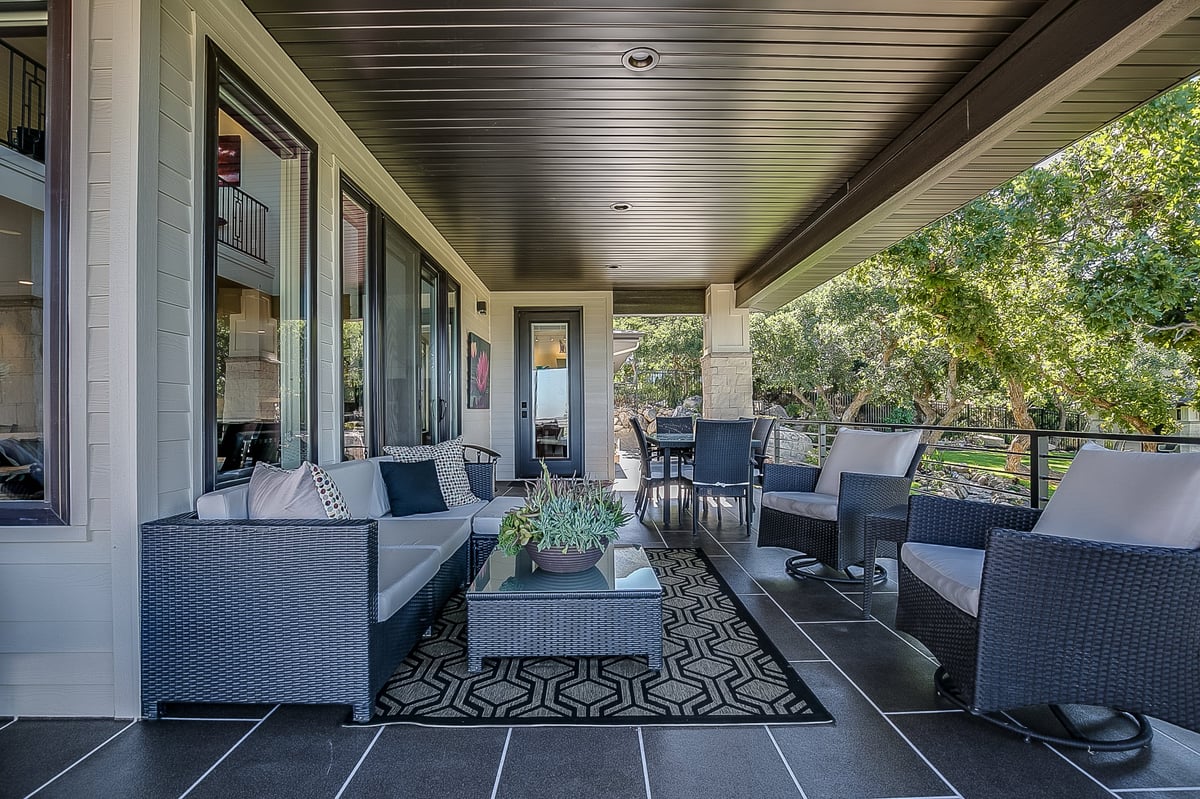
A covered patio is exactly what it sounds like: an outdoor living area attached to your home with a solid roof overhead. The roof can be an extension of your existing roofline, a standalone structure tied into the house, or an open-beam ceiling with a metal or shingle roof on top. The defining feature is the solid overhead cover — it blocks rain completely and provides full shade.
A pergola is an open-air structure with vertical posts supporting crossbeams and an open-lattice roof. It provides partial shade — the beams cast shadows that shift throughout the day, but you'll still feel the sun directly through the gaps. Many homeowners in Magnolia add retractable canopies, shade cloth, or train climbing vines (like wisteria or star jasmine) across the top for additional cover.
| Feature | Covered Patio | Pergola |
|---|---|---|
| Rain Protection | Full coverage | None (without add-ons) |
| Sun Protection | 100% shade | 30–60% shade |
| Usable Days/Year (TX) | 300+ | 200–250 |
| Build Time | 2–6 weeks | 3–10 days |
| Permit Required | Almost always | Sometimes (depends on size) |
| Property Value Impact | High — counts as living space | Moderate — aesthetic bonus |
| HOA Friendliness | Usually approved | Usually approved |
Let's talk numbers — and I'm giving you real Magnolia-area pricing, not national averages that don't reflect our local market.
Important budgeting tip: If you're in The Woodlands or certain Tomball subdivisions, HOA architectural review fees can add $100–$500 to your project. Always check with your HOA before getting too far into planning. I've seen homeowners in Montgomery and Conroe lose weeks of build time because they skipped this step.
After years of building outdoor spaces across Magnolia, Tomball, and The Woodlands, here are the mistakes I see again and again:
A west-facing patio in Texas is punishing between 3 PM and 7 PM from June through September. Even with a solid roof, the low-angle afternoon sun will find you. Consider retractable sun shades on the western side, or orient your structure differently if you're still in the design phase.
It's the number-one complaint I hear about pergolas: "It looks great, but we can't sit out there in the afternoon." The open-top design means you'll get maybe 40% shade at noon, and far less as the sun moves. If shade is your priority, go covered patio or budget for a high-quality retractable canopy on your pergola.
In Magnolia, a covered patio without a ceiling fan is almost unusable in August — even in full shade. The humidity makes still air feel 10 degrees hotter. A good outdoor-rated ceiling fan (look for UL damp or wet rating) is the single best investment you can make. Budget $200–$600 for the fan plus installation.
Cedar and pressure-treated pine are popular for pergolas, but they need re-staining every 2–3 years in Texas humidity. If you don't want the maintenance, consider aluminum or vinyl pergola kits — they cost more upfront but eliminate ongoing upkeep. For covered patio ceilings, tongue-and-groove cedar or painted beadboard both hold up well here.
A covered patio roof dumps a lot of water right at the edge. Without proper gutters and downspouts — or a well-graded concrete pad — you'll end up with standing water, mud, and eventually foundation issues. This is especially critical in Montgomery County where our clay-heavy soil expands and contracts with moisture.
This is a significant investment. Here's what to look for when hiring a general contractor in Magnolia or the surrounding Montgomery County area:
Our climate isn't gentle on outdoor structures. Here's what matters for longevity in Magnolia:
Whether you're leaning toward a covered patio or a pergola, Burton Residential Services can help you design and build the right structure for your Magnolia-area home. We serve Magnolia, The Woodlands, Tomball, Montgomery, Conroe, Pinehurst, and throughout Montgomery County.
Licensed & Insured • Serving Greater North Houston • Family-Owned